 |
|
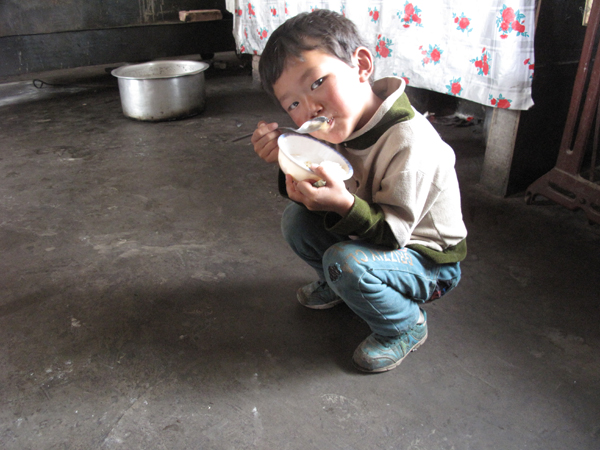
Qumahe Primary School lacked sufficient electricity until the nonprofit organization StepUp! donated three solar panels in July 2013. The remote school's principal says the light after dark "has given the children a second pair of eyes". [Photo by Erik Nilsson / China Daily] |
The best substitute seems to be computers. The school only had one broken computer in August, but the government provided about 50 later.
Still, educators say it's not enough. Students agree.
"I wish we had more computers," 11-year-old Baimayangji says.
"They offer interesting and exciting information."
The fifth-grader dreams of becoming a doctor.
"They're very cultured and help others," he says.
Tibetan-language teacher Sahua says the computers can transform local pedagogy.
"If students use computers, their education will be better," the 30-year-old says.
"The Web could teach them more. They don't know what Beijing or Tian'anmen are, beyond having seen some pictures. They don't know what kind of city the capital is. If they had the Internet, they could know what city schools are like and how those students study."
But computers require previously unavailable electricity.
"Electricity has been our greatest need," Sahua says.
"It has improved every aspect of life for teachers and students."
Youngdingqupai hopes the electricity can one day power "primitive showers".
"There's no plumbing. So the kids have no way to shower," the headmaster says.
"Kids now use well water. Teachers take them to bathe in the river on warm weekends in our two snowless months."
Facilities are being constructed to bring in piped water.
"We notice, the more they bathe, the less they get sick," Youngdingqupai says.
Otherwise, the children occasionally wash their hands and faces with well water.
"Kids can go to the clinic if they get sick, and the school will pay their medical bills," Youngdingqupai says.
While rustic conditions have made it difficult to attract and retain teachers, Sahua says those who work at the school take special pride in the contributions they make.
"The Tibetan-language level was very low when I arrived in 2010," says the instructor from Qinghai's Huangnan Tibetan autonomous prefecture.
"I realized I had a lot of work to do. It has gotten better. So, I'm satisfied with my work. It's an opportunity to improve education, especially their Tibetan, and to let the children know more about their culture."
He wishes the students had an English teacher so they could also communicate with other cultures, he says.
Sahua says his living condition is "OK". But he's glad to see improvements, such as a new dining hall and student dorms.
The structures are finished yet await inspection.
"But we still let the kids live in the dorms," Youngdingqupai says.
"We have nowhere else to put them."
Two children share a bed in each room of about six beds.
Youngdingqupai hopes the classrooms can be improved, too. Many doors are broken and there aren't enough seats, he says.
"We have too many needs to list," he says. "But things are getting better."
Editor's note: Erik Nilsson is a China Daily journalist and the founder of StepUp!, a nonprofit organization devoted to nomadic education in Yushu.
Contact the writer at erik_nilsson@chinadaily.com.cn.


Copyright 1995 - . All rights reserved. The content (including but not limited to text, photo, multimedia information, etc) published in this site belongs to China Daily Information Co (CDIC). Without written authorization from CDIC, such content shall not be republished or used in any form. Note: Browsers with 1024*768 or higher resolution are suggested for this site.
License for publishing multimedia online 0108263 Registration Number: 130349