Comments
  Print
Print  Mail
Mail  Large Medium Small
BEIJING - Tibetan culture has been well preserved and developed, and freedom of religious belief has been respected and protected, says a white paper issued on Tuesday.
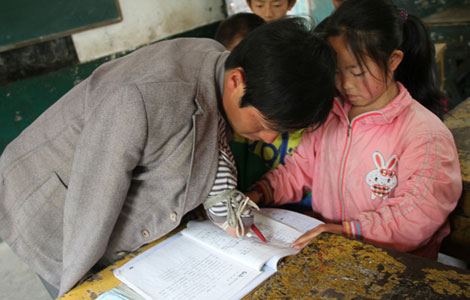
The study and use of the Tibetan language and script are protected by law in China, and bilingual education, with Tibetan as the principal language, is widespread in Tibet, says the white paper "Development and Progress of Tibet" issued by the Information Office of the State Council.
By the end of 2012, there were 282,914 primary school students and 177,981 middle school students receiving bilingual education, accounting for 96.88 percent and 90.63 percent of the total respectively in Tibet, it says.
Currently, there are 23,085 bilingual teachers and 3,700 Tibetan language teachers at schools at different levels, says the white paper, adding Tibetan is also widely used in political life.
"The use of Tibetan is becoming more and more IT-based. Computer coding of Tibetan characters has met the national and international standards. Through the Internet, mobile phones and other means, Tibetans can read, listen to and watch domestic and international news and get all types of information, which has become part of their daily life," it says.
Meanwhile, the local government has made the development of traditional Tibetan medicine a key part of its health care strategy. Cultural relics and historic sites have been effectively preserved in Tibet, and freedom of religious belief has been respected and protected, according to the white paper.
"The State respects and protects their freedom in attending normal religious service, performing sacrificial rituals, and taking part in major religious activities and folk festivals," the white paper says.
Currently, Tibet has 1,787 places for different religious activities, more than 46,000 resident monks and nuns, and 358 Living Buddhas, it says, adding a majority of people in Tibet believe in Tibetan Buddhism.
"Traditional religious activities such as scripture learning and debate, degree promotion, initiation into monkhood or nunhood, abhisheka (empowerment ceremony) and self-cultivation are held on a regular basis," it says.
So far, more than 40 incarnated Living Buddhas have been confirmed through traditional religious rituals and historical conventions.
Regarding religious management, the white paper says the State upholds the policy of separating religion from government, and "it prohibits religion from intervening in the country's administration, justice system and education, and allows no individual or organization to use religion for illegal activities".


Copyright 1995 - . All rights reserved. The content (including but not limited to text, photo, multimedia information, etc) published in this site belongs to China Daily Information Co (CDIC). Without written authorization from CDIC, such content shall not be republished or used in any form. Note: Browsers with 1024*768 or higher resolution are suggested for this site.
License for publishing multimedia online 0108263 Registration Number: 20100000002731