Comments
  Print
Print  Mail
Mail  Large Medium Small
BEIJING -- As bizarre as it is painfully realistic, a kindergarten in Lishui in East China's Zhejiang province was built in one year but took two more years to go through all the administrative procedures and obtain 133 approval stamps.
Local officials have admitted that some of the stamps were irrelevant and unnecessary after media exposure of the story last week that churned up plenty of public discontent.
What started out as idle chatter has been upgraded to a stronger yearning for speeding up transformation of government functions.
Transformation of administrative roles, is an old chestnut, but remains a huge challenge today, and it has become the mantra of Chinese leaders.
To fundamentally change government functions is a mission that the Chinese government must accomplish to improve administrative efficiency, inject vitality to the economy, and further China's progress in a new era.
A recent event might signal concrete efforts toward that goal.
The Shanghai Pilot Free Trade Zone (FTZ) is an experiment in high level reform. High on the FTZ agenda is changing government function.
At home, experts' analyses of the Shanghai FTZ are pointing to the government's determination to pursue a model for efficient administration, supervision and law enforcement, as well as a fair and transparent market, which are evidenced by a number of trials being rolled out at the zone.
Wang Xiaoguang, a researcher at the Chinese Academy of Governance, said the emphasis on transforming government signified that there remains much room for reform.
During the past 30-odd years of reform and opening-up, the country has grown from the world' s 10th biggest economy in 1978 to the present position of second biggest. Despite this achievement, problems remain, with administrative monopoly being one of them, said Wang.
Private enterprises still encounter market access barriers and unfair treatment due to monopolies of state-owned companies. The excessive administrative authority has impedes market activity, Wang said.
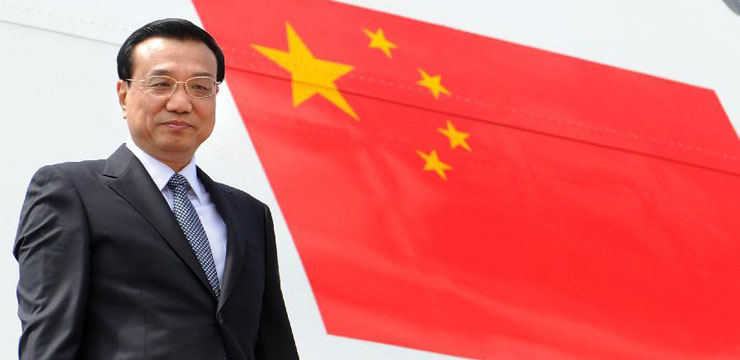
Chinese Premier Li Keqiang said last month at an economic forum that the key to economic reform is to balance government, market and society, and let the market carry out its role to induce more vitality.
Wang believes it is critical that reform creates a fair market and improves public administrative efficiency.
"Our government should act more like a night watchman, and reduce intervention in the micro-economy," he said.
Analysts said the "negative list" approach being tried in the FTZ is just such an attempt to slash administrative power. This approach allows more freedom for foreign investors setting up business as they will operate according to a clear-cut "not-to-do list" instead of a vague "to-do list".
In recent years, China's central government has been stressing government's function change and relegating authoritative power. The State Council, the Cabinet, has this year scrapped or relegated more than 200 approval rights.
A report by the Research Office of the State Council said such efforts are driving the government toward transparency, more limited powers and to becoming more service-oriented.
However, despite the central government mandate for change, formalism and bureaucracy remain as some local governments are reluctant to rein in their powers, as shown by the kindergarten case of inefficiency due to administrative interference.
Wang Xiaoguang said that a vast network of groups with vested interests was created along with China's administrative system. Against this backdrop, further reform will encounter opposition. "The biggest resistance comes from within the government itself", Wang said.
However, analysts claim that limiting the government power does not mean the government can rest easy because a market that lacks supervision and regulation leads to problems of its own.
The downfall of several senior officials including former railways minister Liu Zhijun, who received a suspended death sentence for taking bribes and abuse of power in early July, show that excessive administrative authority leads to corruption.
According to the premier, the government will continue to crack down on infringement of intellectual property rights and fraud.
While relegating administrative approval rights, the government is responsible the rule of law under which law-breakers are punished and pay for their wrong-doings, Wang said.
An important meeting of the Communist Party of China in November will be a springboard for major national reforms, with governmental function ?expected to be one of the main targets.

Copyright 1995 - . All rights reserved. The content (including but not limited to text, photo, multimedia information, etc) published in this site belongs to China Daily Information Co (CDIC). Without written authorization from CDIC, such content shall not be republished or used in any form. Note: Browsers with 1024*768 or higher resolution are suggested for this site.
License for publishing multimedia online 0108263 Registration Number: 20100000002731