


Third-party supervision proposed to fight SOE graft
Experts have suggested bringing in third-party supervision to prevent corruption in State-owned enterprises after a senior executive of China’s biggest oil company was placed under investigation for graft.
The country’s top disciplinary watchdog announced on Monday that Wang Yongchun, vice-president of the China National Petroleum Corporation, is being probed for a possible "severe discipline violation" — a term that generally refers to corruption in China.
No details were given by the Central Commission for Discipline Inspection of the Communist Party of China.
Information on the company’s website shows that Wang became the leading executive of CNPC, a State-owned enterprise and one of the world’s major oil producers, in April 2011, after working in the industry for more than 30 years.
He is also the general manager of the corporation’s branch in Daqing, Heilongjiang province.
CNPC officials could not be reached for comment on Monday.
Xu Long, chairman of another State-owned enterprise, China Mobile’s branch company in Guangdong province, is also being investigated for corruption, according to local media reports this month.
Clean-governance experts said corruption of senior executives in SOEs deserves more attention, as the country intensifies a crackdown on corrupt officials.
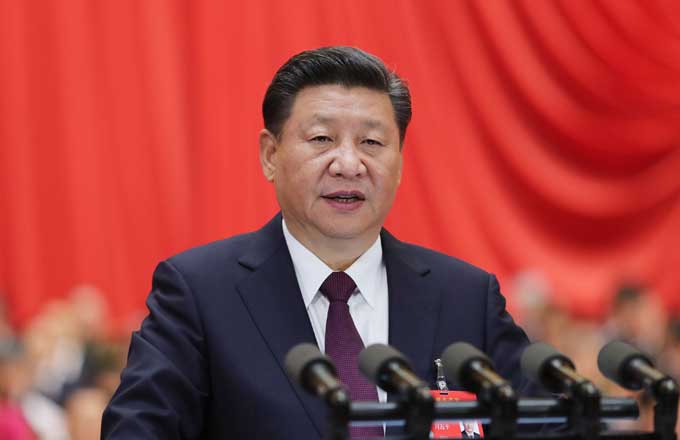
Xi Jinping, China’s top political leader and head of the military, has vowed to target both low- and senior-level corrupt officials.
Experts said bringing in third-party supervision might be an effective way to prevent dirty practices at SOEs.
"These big companies have more chances to allocate resources in the country. The more distribution power they have, the greater possibility the field will breed graft," said Yang Xiaojun, a law professor at the Chinese Academy of Governance.
He said that although big SOEs have self-disciplinary departments, the supervision might not be satisfactory because it’s hard for these watchdogs to remain independent.
Yang said anti-graft work at SOEs needs both "major surgery" and "small operations".
Solving the problem is difficult, because it requires deep reform of the SOE management system, he said.
"So small operations, or providing supervision via independent institutes, such as auditing departments, might be the most practical and effective way to tackle corruption in SOEs," he added.
Zhu Lijia, a professor specializing in fighting corruption at the academy, said the self-supervision at many SOEs cannot function independently, so it sometimes becomes superficial.
"In addition, there is also no clear punishment if such companies cannot carry out self-supervision," he added.
Bao Chang contributed to this story.














Registration Number: 130349


