


Farmers brew up wealth with native cup of tea
 |
|
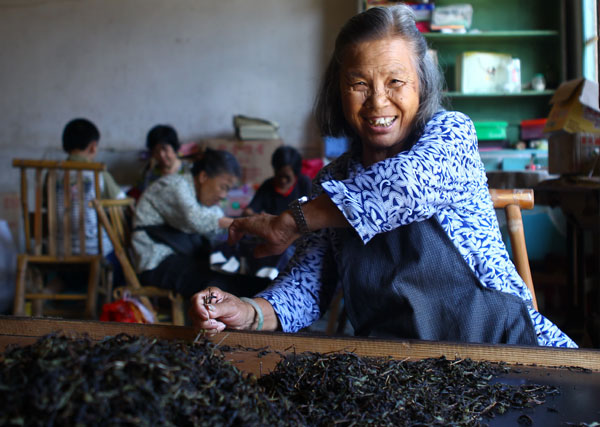
Women are picking tea leaves in Xiamei village. [Photo by Zou Hong / China Daily] |
Growing market
Dahongpao tea makes high demands on the environment and mainly grows in Wuyi Mountain, according to Huang Xiangeng, director of the Wuyishan Shengdong Tea Culture Institute.
Wuyi Mountain is known for its danxia landform, a geological term describing a continental red bed landform with many escarpments. The multi-hued land is full of minerals and features high mountains and deep valleys and a good covering of countless varieties of plants.
In addition to the geology, abundant water vapor and moderate sunshine are major factors in producing the unique taste of Dahongpao, Huang Xiangeng said.
The blending process, the procedure for making Dahongpao tea, is complicated and each of the separate 18 steps is crucial to the taste.
Only experienced blenders with more than five or six years experience ever have the opportunity to practice these skills because the yield of Dahongpao is comparatively low.
"We have many diligent tea farmers, but working hard is just one of the requirements for making good tea; a good understanding of the tea-making method and tea culture plays a much more important role. And there are still very few people who meet all the requirements," said Huang.
Demand for Dahongpao was low before 2010, when the price was between 600 to 1,000 yuan per kg. Even tea from Tianxin village only cost around 2,000 yuan per kg.
|
||||

However, at the beginning of 2010, money began to flow into the Dahongpao tea industry and Impression Dahongpao was launched. The show was China's first tea-themed open-air live performance. It combined tea culture with visual highlights and was the brainchild of cinematic maestro Zhang Yimou, director of Red Sorghum and Raise the Red Lantern. The market reaction was swift and the price of Dahongpao more than tripled.
Not only have the tea farmers benefited from the boom in demand for Dahongpao, the local economy has also flourished.
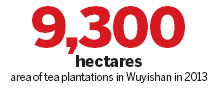
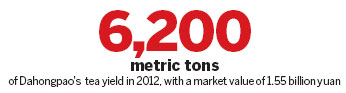
Wuyishan city is home to some 9,300 hectares of tea plantations, of which 8,000 hectares are grown from cuttings from six "mother" trees, according to the local tea bureau. In 2012, the yield of Dahongpao tea reached 6,200 metric tons, with an market value of 1.55 billion yuan.
With more than 1,800 registered tea companies in the area, approximately 80,000 people are employed in tea-related jobs. That's boosted the employment prospects of the large, rural labor force, but also promoted the development of related industries, such as packaging, logistics and tertiary industries, particularly services.
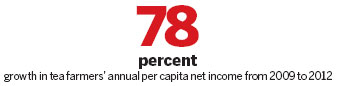
The per capita net income of tea farmers in Wuyishan city reached 2,486 yuan in 2012, an increase of 78 percent from 2009, according to the local tea bureau. That saw the city's tax income soar to 51.19 million yuan, a jump of almost 110 percent jump from 2009.















Registration Number: 130349


