In with old and in with new
|
 |
|
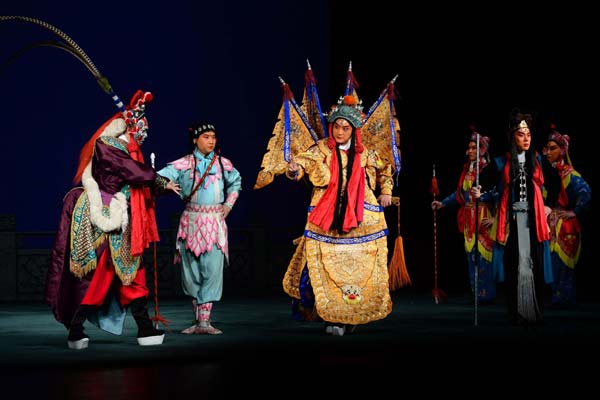
Artists perform Peking opera at the Lucent Danstheater in Hague, the Netherlands, May 21, 2013. [Photo/Xinhua] |
You cannot blame the presenters or the audience. Peking Opera is an acquired taste. It takes years to decipher the secret codes of appreciation. For one, the lyrics and dialogue tend to be impenetrable without title projection — that is for us native Chinese. And the emotions and motivations of the characters do not speak to modern audiences as much as, say, highly accessible pop music.
There was an effort to modernize the art form in the 1960s and 1970s. That repertory, called the "model operas", is in equal measure a source of nostalgia, and a reminder of pain and shame. They were not created by artists who worked under ideal conditions, to say the least, but rather, in abnormal situations where one wrong idea could land you in jail. But the end products fed a hungry nation devoid of any entertainment. In purely artistic terms, these ideology-driven operas were unqualified successes. For example, Western musical instruments were seamlessly incorporated to expand the range of expressiveness. Of course, you can argue that during those years nobody dared to offer a second opinion, and a tune repeated a thousand times would no doubt turn into a classic. But it could also be true that if you rounded up the nation's top artists and threaten them with all forms of terror, what they created wouldn't be too shabby.
Even if the tunes from the model operas are endlessly hummable, at least to one whole generation, I don't consider it a good precedent in reviving the glory of Peking Opera. If I have to choose between the hoary repertory of palace drama and the vitality of revolutionary operas, I would rather stick with the former. The latter is an anomaly of the times.
Traditional operas are stagnant partly because they are cut off from modern necessities and sensibilities. In the old days, people tended to rely on them for a regular diet of history lessons; nowadays that mantle is picked up by television serial dramas. Another shift in taste is, people used to prefer drama sung than spoken, and now the young generation may like plays and music, but often squirm when seeing the two forms fused. That may explain the lack of popularity in China of the musical genre.
Good-intentioned but misguided efforts to popularize Peking Opera include the initiative to make a dozen arias suggested listening material for high-school students. That may serve to break down the mystique enshrouding the art form, but it is unlikely to convert many of them into true lovers. Exposure is certainly not the biggest hurdle. There are special television channels devoted to traditional opera that any one who cares to can tune into to get their fix.
It is the "easing into it" that will help youngsters with the learning and appreciation process. And that's where the documentary may be an effective aid. It demystifies the art form while at the same time placing it under a thick halo.