College losing appeal as job market shrinks
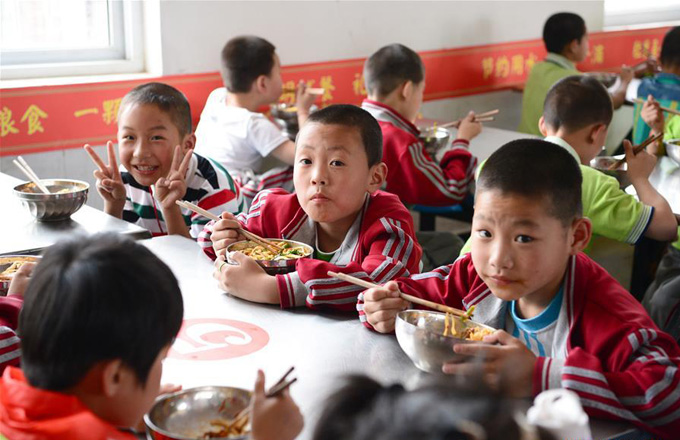
The Ministry of Education has made an effort to reduce the rural-urban education gap by reserving 30,000 seats at leading universities for rural students in this year's admission plan, according to a statement posted on its official website on Tuesday.
The number of reserved vacancies is three times as many as last year's figure, it said.
The ministry said the plan covers 832 impoverished counties in the vast countryside, compared with 680 in 2012.
The move will enable leading universities to recruit 8.6 percent more rural students this year compared to last year.
Statistics from the ministry show that the national average college admission rate was 8.5 percent in 2011, while the number for impoverished counties was 5.7 percent.
Calling for reforms
While access to top universities is out of reach for most rural students, average schools of higher learning should adapt their curriculum to meet demand from the job market, said Chu of the China Institute of Education Sciences.
"Many colleges and institutes of little fame charge 10,000 yuan to 20,000 yuan a year, but cannot guarantee a job," he noted. "Why should they all train accountants and lawyers when these industries are hiring fewer people nationwide?"
For three years, graduates majoring in accounting, law, English, computer science, international trade and business administration have been among the least desired candidates on the nationwide job market, according to a survey by a Guangzhou-based recruitment agency Nanfang Human Resources Co.
The resulting report said civil construction and mechanics majors had been particularly welcome in Guangzhou in the past two years. "But schools should incorporate more field practice into their curriculum to improve students' practical skills," it added.
Improving transparency is also crucial in students' college admission and employment, according to Xiong Bingqi, deputy director of the 21st Century Education Research Institute in Beijing.
Most rural students have little access to information on how their admission is progressing before they receive an admission notice by mail, or are simply told they have failed.
The education ministry's expansion plan for rural students does not easily reach every candidate.
"It's hard to give a detailed timetable, but students should check with local college recruitment authorities after the national test," a ministry official said on condition of anonymity.
"But it will probably never occur to a rural student to call or visit such authorities," retorted Xiong.
He sees it as essential to forge ahead with education reforms and establish a student-based college education system. "In such a system, students are free to choose their ideal schools and favorite subjects in order to prepare themselves for the job market and help improve the quality of college education," the research chief said.