Li's India trip shows pursuit of better ties
BEIJING - The choice of India as the first leg of Li Keqiang's maiden overseas trip as Chinese premier sent out a clear signal that Beijing's new leadership prioritizes enhancing ties with New Delhi despite border spats and other disputes.
The rationale is simple: With China and India being the world's two largest developing countries and most populous nations - accounting for about 40 percent of the global population, a sour and bitter relationship would serve the interests of neither side.
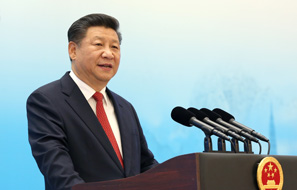
For that reason, in recent talks with Indian Prime Minister Manmohan Singh, both Chinese President Xi Jinping and Premier Li reaffirmed China's commitment to fostering stronger bilateral ties while effectively managing border problems and other thorny issues.
Over the years, bilateral relations have withstood a host of tests, including the latest border spat. But the swift cooling-down once again shows that both nations are looking at the big picture of their ties, instead of being carried away by incidental matters.
It is obvious that both sides want fewer hostilities and confrontations in their neighborhood and, with their primary focus on national development, need to seize the strategic growth opportunities facing them.
Since the 1950s, many in the developing world have regarded China and India as the champions of their rights, and that shared responsibility has inspired the two nations to work more closely on issues like climate change, food and energy security, and global financial woes.
Now, as both nations are key stakeholders with increasing importance in regional and global affairs, it is a better moment than ever for them to join hands to tackle financial turmoils, terrorism and other challenges of the day.
Those in the West who tend to see China-India ties through a prism of territorial disputes and inter-power rivalry must have forgotten the fact that their border problem is largely a legacy of Western colonialism. In the thousands of years before that, the two old civilizations rarely quarrelled for territorial issues.
It was their similar experiences of anti-colonialism and independence movements that ushered in China-India cooperation in the modern era.
Also, it is thanks to the same spirit of hard-work and self-reliance that both countries have achieved economic booms over the past decades, with China becoming the "world's factory" and India growing into a top IT and outsourcing hub.
Moreover, it is due to the same aspiration for a fair and just world order that the two countries have stood side by side and coordinated closely under various multilateral frameworks, including BRICS, BASIC, and the Doha round of trade talks.
- Chinese Premier eager to return to India
- China, India must be wary of Western media
- Sound bites on China-India ties
- Balanced, sustained trade sought with India
- Premier eager to return to India
- Li encourages youth participation in China-India co-op
- Li to visit India, Pakistan, Switzerland and Germany