New rules for NGOs to improve operations
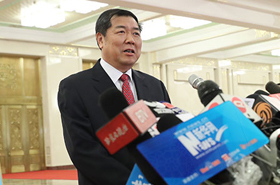
China is set to issue revised administrative regulations by the end of 2013 that will remove what is arguably the biggest obstacle to launch an NGO on the mainland, a senior official from the Ministry of Civil Affairs told China Daily in an exclusive interview.
The legislative amendment is expected to assist the registration of hundreds of thousands of NGOs.
The amendment will also articulate rules for overseas NGOs to set up branches, and for expats to launch NGOs on the Chinese mainland, Wang Jianjun, director of the Bureau of Administration of NGOs under the ministry, told China Daily.
Wang said the number of calls and visits to the bureau for inquiries has tripled since the State Council pledged in early March to boost the development of civil societies as part of its plan to restructure and transfer more government functions.
The plan states that establishing four categories of NGOs — industrial associations, charities, community services and organizations dedicated to promoting science and technology — will entail direct registration with civil affairs authorities, abandoning pre-examination and approval by other regulators.
Wang regards the plan as "a major breakthrough" for the development of NGOs in China, predicting that empowered civil societies will be a driving force for the country's development in the coming three decades.
There were more than 490,000 NGOs on the mainland at the end of 2012, of which 85 percent were of the above four types, according to the ministry.
Wang said at least 1 million NGOs either operate without legal identities or have to register as companies under the current registration policy.
"There is no reliable data to show the exact number of unregistered NGOs, but I know that most NGOs providing services in communities are not licensed, including about 400,000 NGOs dedicated to senior residents," he said.
"A direct registration policy will greatly boost their development and help these organizations to become better service providers," he said.
Nineteen provinces have been encouraged to launch pilot programs for direct registration since 2011.
South China's Guangdong province rolled out the direct registration policy in July for eight types of NGOs, and last year saw 4,200 NGOs registered in the province.