'New phase' for Sino-US relationship
The US' "pivot to Asia" marks a new phase in US-China relations, with opportunities outweighing challenges as China, Japan and South Korea undergo leadership changes, US President Barack Obama's national security adviser said on Monday.
Outlining China as a major "pillar" of the US' rebalancing policy, Thomas Donilon said the world's two biggest economies should continue building a "constructive relationship" and pointed to "substantial progress" the relationship has made in the four years Obama has been in office.
"The president places great importance on this relationship because there are few diplomatic, economic or security challenges in the world that can be addressed without China at the table and without a broad, productive and constructive relationship between our countries," Donilon told an Asia Society audience in New York City.
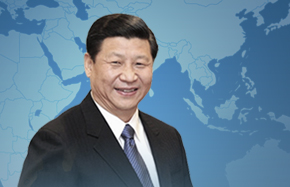
In a speech on Asia policy, Donilon said the administration is well-positioned to build on existing relationships with China's new leadership, headed by Party chief Xi Jinping.
"Taken together, China's leadership transition and the president's re-election mark a new phase in US-China relations — with new opportunities," said Donilon, who has served as Obama's top national security aide since October 2010.
The US and China, he said, should focus on improving the quality and quantity of cooperation while promoting "healthy economic competition".
Pivot at center
The "pivot" was among the major foreign-policy initiatives of Obama's first term, highlighting a US strategy to assert military might in the Asia-Pacific region. Some experts see the policy as a means of balancing China's influence there.
The Obama aide, who served as assistant secretary of state for public affairs under former president Bill Clinton, said he disagreed with the view that China's rise inevitably will create conflicts between the two countries. The US welcomes a "peaceful, prosperous" China, Donilon said in his speech.
"We do not want our relationship to become defined by rivalry and confrontation," he said. "And I disagree with the premise put forward by some historians and theorists that a rising power and an established power are somehow destined for conflict." On Tuesday, Chinese Foreign Ministry spokeswoman Hua Chunying said China welcomes Donilon's positive remarks on the Sino-US relationship.
She said the relationship is at an important phase and China hopes to enhance coordination and cooperation with the US in all areas.
The two countries should "respect and take care of each other's core interests and major concerns" and build up a new type of big-power relationship based on mutual respect and cooperation that aims at a win-win result, Hua said.
Military interaction
While looking ahead to opportunities, the White House adviser also urged the nations to tackle a few challenges, including increasing their military interaction and strengthening economic ties.
"A deeper US-China military-to-military dialogue is central to addressing many of the sources of insecurity and potential competition between us," Donilon said. "We need open and reliable channels to address perceptions and tensions about our respective activities in the short term and about our long-term presence and posture in the western Pacific."
Donilon also cited cybersecurity as a "growing challenge" the two countries must address.
"Economies as large as the US and China have a tremendous shared stake in ensuring that the Internet remains open, interoperable, secure, reliable and stable," he said.
"Both countries face risks when it comes to protecting personal data and communications, financial transactions, critical infrastructure, or the intellectual property and trade secrets that are so vital to innovation and economic growth."
In February, private US Internet-security firm Mandiant issued a report accusing a secret Chinese military unit in Shanghai of being behind years of cyberattacks against US companies — an accusation that China has strongly denied.
Hua said China is vulnerable in terms of cybersecurity and is one of the countries that has been attacked most.
Cheng Guangjin in Beijing contributed to this story.
Contact the writer at yuweizhang@chinadailyusa.com