Faced with the pressure of public opinion, Wu Changsheng, vice-governor of Lankao county, issued a press release on Jan 5 in which he admitted that the case highlighted the fact that the relevant local government departments lack supervision and there are loopholes in their working methods and said they bear a heavy responsibility for the tragedy.
Zhang said those who perform charitable acts take huge risks. Critics may accuse them of doing it for money or fame, but their investment in terms of money, emotion and even sometimes their health, is enormous.
 |
|
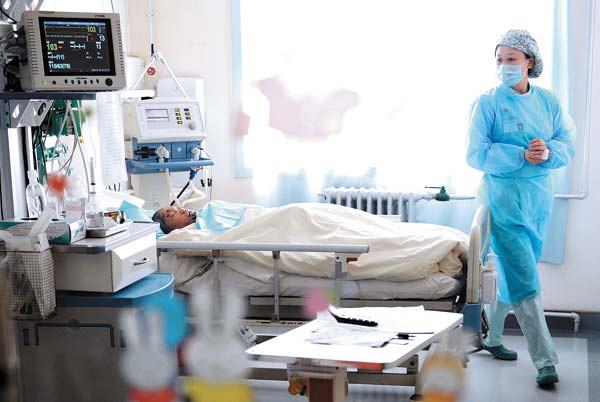
Yuan Xiaoshi, 10, a survivor of the fire that broke out at an unlicensed orphanage in Henan province on Friday, is still in a critical condition at a hospital in Kaifeng. [Xiang Mingchao/China Daily] |
"Do you know how much work is involved in raising a child? Now imagine that you have 18 children, or even more," Zhang said. "The authorities have to face the fact that many orphans are still waiting for help, or the Lankao fire won't be the last tragedy."
Zhang said that both central and local governments have limited budgets and that the best solution would be to encourage the development of grassroots adoption organizations.
"Stronger regulations and increased monitoring would allow nongovernmental organizations to do a better job," he said. "They cover a wider area and are more accessible."
At the end of 2010, there were 650,000 orphans nationwide, according to the Ministry of Civil Affairs. Meanwhile, Beijing had 425 orphanages, with 75,000 beds, at the end of 2011, said the Beijing Civil Affairs Bureau. Those institutes housed 34,000 children at the end of 2011, an increase of more than 11 percent on the previous year.
In a directive issued last year, the Beijing municipal government pledged to encourage nonprofit organizations to become involved in caring for orphans and raising funds to improve their standards of living.
 |
|
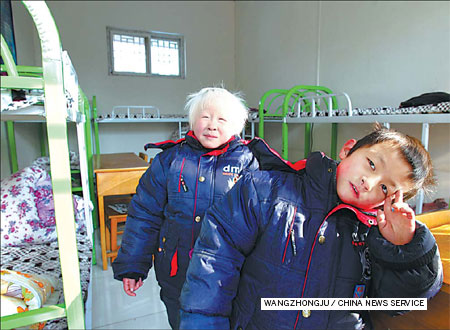
Children from Yuan Lihai's orphanage in Lankao county, Henan province, who have been moved to the county's rescue center. |
But large cities, such as Beijing, are the exceptions that prove the rule. In many third- and fourth-tier cities, especially in the vast rural areas, public orphanages are few and far between.
The number of public orphanages is still far too small to meet the demand of able-bodied orphans, let alone those with congenital diseases, said Wang Zhenyao.
"Individual and private child welfare homes are a necessary support for adoption. However, without proper policy support, capital and professional staff, it will be difficult to develop these places, he said.
Complex procedure
In July 2011, the Ministry of Civil Affairs ruled that each orphan being raised by welfare agencies should be provided with a living allowance of at least 1,000 yuan ($160) per month. Children housed by individuals should receive a minimum of 600 yuan per month. Beijing provides the highest allowances, with children in public institutions receiving 1,600 yuan. Those housed with families and individuals get 1,400 yuan.
However, the application procedures are tortuous and often difficult to overcome.
The State Council said there are four accepted channels to help orphans: They can be adopted by relatives; raised by welfare agencies; be placed with foster parents; or adopted by families that hold the relevant permits. All other adoption procedures are illegal.
"The conditions imposed on orphans are stringent. The complicated and time-consuming procedures and the dozens of certificates required for legal adoption just close the door on many orphans," said Wang Zhenyao.
Shi Qinghua, founder of Light Love Family, a grassroots program for orphans in Beijing, has deep experience of the system. His organization has been attempting to gain legal status for almost 10 years, but so far has met with little success.
Shi said the civil administration department approved his work and tried to help him register as a non-government organization. But the task was made more difficult by a lack of detailed regulations, including basic information such as the name of the office to which he should apply to register formally or the department that would provide financial aid.
A number of government departments are involved in the adoption process, including the public security bureau and the civil administration and transportation departments. It is almost impossible to contact all of them and promote a unified approach, said Shi.
He took the hukou, or residents' permit, as an example, saying that 25 percent of the children in the school run by LLF don't have hukou in the areas in which they reside, which is crucial for education and social security, and each hukou takes years to register.
The Lankao tragedy has rung alarm bells for other grassroots orphanages, he said. Since founding the school in 2003, Shi and the other teachers have rotated through three eight-hour shifts every day to ensure the children's safety, but the expense has exerted great pressure on them.
"I feel it's just getting harder and harder, and I'm worried that no one will bother to perform charitable work in the years to come," he said.
Contact the reporters at hena@chinadaily.com.cn, pengyining@chinadaily.com.cn and cuijia@chinadaily.com.cn
Related stories:
Beijing's Angel Mom Foundation
Orphanage owner in hospital



Copyright 1995 - . All rights reserved. The content (including but not limited to text, photo, multimedia information, etc) published in this site belongs to China Daily Information Co (CDIC). Without written authorization from CDIC, such content shall not be republished or used in any form. Note: Browsers with 1024*768 or higher resolution are suggested for this site.
License for publishing multimedia online 0108263 Registration Number: 130349