Decoding China's political logic
(Xinhua)
Updated: 2012-11-11 17:09
 Comments()
  Print
Print  Mail
Mail  Large Medium Small
BEIJING - The narrow time gap between the US presidential election and the Communist Party of China (CPC) national congress that will elect a new leadership has naturally triggered attention worldwide.
Political research professionals and amateurs have compared the two countries' electoral systems and political systems. News houses and the public also show keen interests.
As the world's two largest economies with totally different political systems, or as the largest developed country and the largest developing one, they must have something special respectively.
Otherwise, it is difficult to explain logically China's rapid economic growth over the past three decades, the remarkable increase in people's livelihood, and other historic changes of the country.
The "China miracle" is not only a result of the reform and opening up of economy, but also of the progress in the reform of the political structure, and the improvement in democracy and legal system.
In the view of the Chinese people, China shall not copy the development patterns of foreign countries, and there is more than one pattern demonstrating democratic politics. Every country shall choose the social system and path of democratic politics according to its own conditions.
There are lessons for China. A few countries copied Western political systems, and some moved further than the United States to adopt general elections, but they soon fell victim to ethnic confrontation, social unrest, and economic standstill or even recession. Their copycat versions often led to unexpected or even counterproductive effects.
During the exploration of the people's democratic system, the CPC adopted the mode of "electoral democracy plus consultative democracy." Consultative democracy is exactly the missing part in Western democracy.
Admittedly, the democratic political system is still developing and needs to be further improved. The top leadership of the CPC is explicit in this regard, just as the Party congress report says, "We must advance unwaveringly along this path to ensure that China's socialist democracy has ever greater vitality."
One impressive phenomenon for observers of Chinese politics is that the CPC leadership always puts satisfying the immediate interests of the broadest majority of people as its priority and always sticks to pushing forward the reform of the political structure.
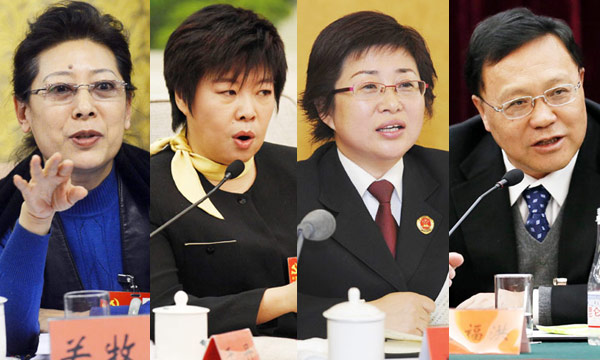
In the level-by-level election of Party delegates and deputies to the people's congresses, direct election is practiced at levels higher than before. Multi-candidate elections have become more competitive with increasingly bigger elimination margins.
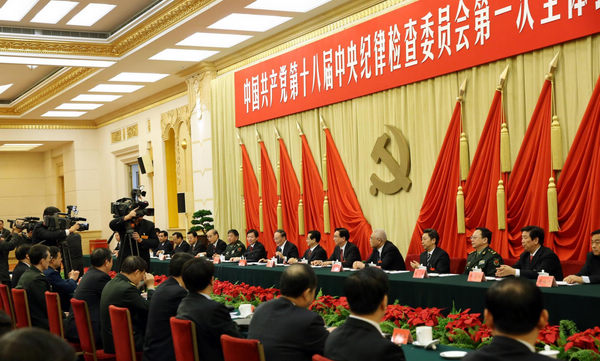
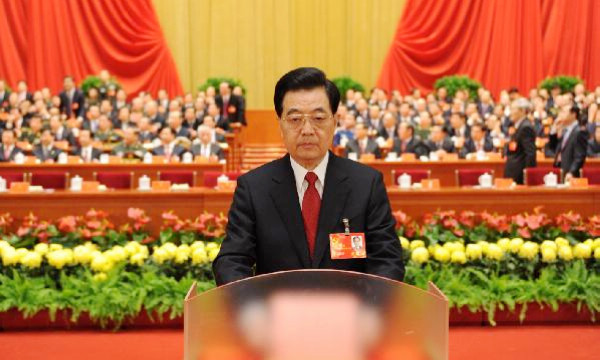
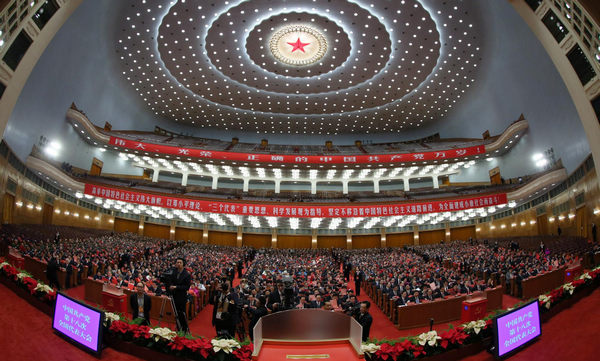
The ongoing 18th CPC National Congress is presenting a democratic atmosphere that has won favor of people in China and the rest of the world.
For the international community, China's political structure and its reform achievements are gaining more and more recognition. The efficiency which the Chinese system has shown in coping with the international financial crisis has earned praise.
At the same time, the so-called Western political model is revealing internal flaws. Its performance in the international financial crisis has triggered people to reevaluate the system.
There is no perfect political system model that can be applied across the world. Every country shall explore the political development road suitable for its own characteristics, as well as its own political logic.
In the report to the 18th CPC National Congress, Hu Jintao said the CPC should draw on the political achievements of other societies, but "we will never copy a Western political system." It shows the CPC will follow a socialist path of making political advance with Chinese characteristics.
Such a political development road follows China's historical and cultural tradition, and suits its own national conditions. On the other hand, it is improving with the times and will always be inclusive. This is China's political logic.
Related Stories
Experts urge focus on mending social disparity, curbing inflation 2012-11-11 14:07
What to watch in China's political reform? 2012-11-11 14:01
Foreign politicians, parties, organizations congratulate CPC on national congress 2012-11-11 13:43
Little room for further cuts in mobile charges 2012-11-11 13:43
World party leaders congratulate China on CPC congress 2012-11-11 11:24
CPC delegates' aspirations at a glance 2012-11-11 10:46
Top News
Xi emphasizes adherence to CPC Congress spirit
Top legislator urges implementation of congress spirit
Moderately prosperous China brings chances to world
Video