What to watch in China's political reform?
(Xinhua)
Updated: 2012-11-11 14:01
 Comments()
  Print
Print  Mail
Mail  Large Medium Small
Consultative decision-making
China started political reform as early as in the 1970s. Important moves like the mandatory retirement of senior officials were made in the 1980s, spearheaded by charismatic former leader Deng Xiaoping.
In the 13th National Congress in 1987, the CPC formally stated its goal in political reform as to create a form of democracy that is better and more practical than the ones adopted by the developed capitalist states.
"The core of reform is to help the Party maintain leadership status, enhance the rule of law, and expand people's democracy," said Li Chongfu, a veteran Marxism scholar with the Chinese Academy of Social Sciences. "Multi-party rule is not a goal. Such a political system is intolerable in a socialist state."
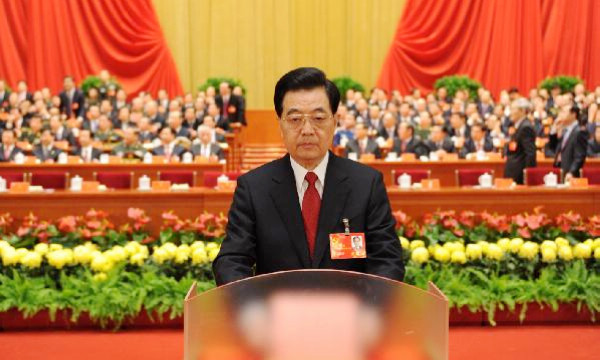
Hu Jintao also reiterated in his report that "we will never copy a Western political system."
Political experts said while the CPC's leadership is not to be challenged, the Party is undertaking reforms to its decision-making more open through increased consultation with the public.
Yan Shuhan, a professor of the Central Party School, said Hu's report signals efforts to boost "consultative democracy", a Chinese innovation of democratic form.
"Hu's report shows increased confidence China has in its own political system," Yan added.
The Central Party School is a top think tank for the CPC and a theoretical training camp for the up and rising Party elites.
Yan said while still in infancy in many Western countries, consultative decision-making has been widely practiced in China's political system since 1949 when the Chinese People's Political Consultative Conference (CPPCC) was founded.
The CPPCC, pooling together representatives from a wide variety of political and professional backgrounds, acts as an advisory body parallel to each level of the Party hierarchy. These advisors, divided into specialized committees, are consulted or entitled to make proposals during the policy making of the ruling party.
Zhou Tianyong, a Central Party School professor, said the election-centered representative democracy has its flaws when it comes to the matters concerning ethnic minorities or regions with a small population because the decision is made by voting.
"It is a major hallmark of modern democracy to expand the scope of political participation," Wang Changjiang, a Central Party School professor specialized in Party's mechanism improvement said in his new book.
"A form of political participation is to allow the public to express their opinions in a way to influence the decision-making of authorities."
Related Stories
Election methods of CPC National Congress approved 2012-11-10 19:44
CPC National Congress gets world attention 2012-11-08 16:12
Key national congresses in CPC history 2012-11-07 11:13
How CPC National Congress delegates elected 2012-11-06 21:30
Makeup of delegates to 18th CPC National Congress 2012-11-06 20:49
CPC determined in political reform: official 2012-11-09 21:04
Communists walk fine line in reform 2012-11-09 19:57
Top News
Xi emphasizes adherence to CPC Congress spirit
Top legislator urges implementation of congress spirit
Moderately prosperous China brings chances to world
Video