Introduction to Tian'anmen Square
(cctv.com)
Updated: 2010-12-03 17:22
 Comments()
  Print
Print  Mail
Mail  Large Medium Small
Standing next to me is our current affairs commentator, Dr Gao Zhikai. With the help of this huge touch screen behind us, we will take you on virtual tour of the venue under the spotlight today – the Tian'anmen square in the heart of Beijing. Later in the program we will also unveil some lesser known facts and figures about the upcoming parade, which make it so much more special and significant. First let's take a 3 dimensional look at the famous Tian'anmen square.
Tian'anmen square, one of the largest civilian squares in the world, covering an area of 440,000 square meters. About 500 meters from east to west and nearly 900 metres from north to south. It has witnessed numerous historic episodes in modern Chinese history. On this square 13 military parades have taken place since the founding of New China. It is still a must-see place for the visitors to Beijing.
The Tian'anmen Rostrum is the majestic structure that sits at the northern end of the square, facing south. Such arrangement represents authority and power. The Rostrum was first built early 15th century and in mid 17th century it became known as the Tian'anmen, or Gate of Heavenly Peace. It was on this building that Chairman Mao proclaimed the founding of the People's Republic of China on October 1, 1949. During military parades, state leaders will review the troops from on top of the rustrom. Dignitaries from home and abroad watch the parade from the viewing stands situation on the right and left hand sides of the rostrum.
On the eastern side of the square sits the National Museum of China. It combines two previous museums – Museum of Chinese Revolution and Museum of Chinese History, built in the 1950s. The name of National Museum of China was officially adopted in 2003. Important relics displayed here include ancient pieces, as well contemporary pieces.
Opposing the Tian'anmen Rostrum to the southern edge of the square is the Chairman Mao Memorial Hall. Built in 1977, soon after the great leader passed away. Everyday thousands of people line up here to take a look at the embalmed body of Chairman Mao and reflect on the legacy he left behind.
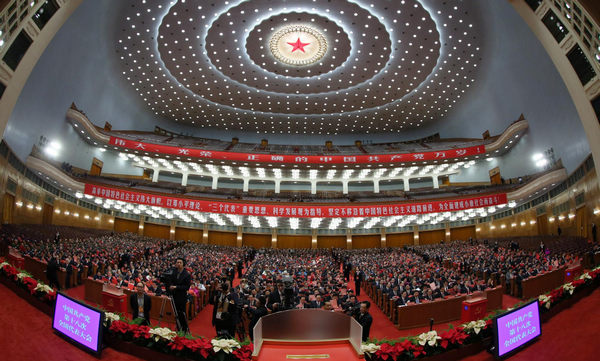
On the western edge of the Square stands the Great Hall of the People. This can be called China's Parliament building as the National People's Congress, the top legislature functions from here. Every year in spring, the Great Hall of the People would house the highly anticipated "Lianghui" – the NPC and the CPPCC, China's top political advisory boby. State banquets are sometimes held here as in the case of Richard Nixon's visit in 1972. But increasingly private events and concerts also have the privilege to take place here.
National Flag Pole is where the National flag is hoisted everyday at sunrise and lowered at sunset. These ceremonies are watched daily by hundreds of people. But today, the national flag will be raise at 10 o'clock to officially kick off the parade.
Finally we come to the centre of the square where stands the towering Monument to the people's heroes. Erected in April 1958, this monument pays tribute to all those who sacrificed their lives for the liberation of China, from the first opium war in 1840 up until 1949. It took eight years to built, with ideas contributed by people from all walks of life.
If you ever have the chance to come close to the base of the monument, you will be awed by the grandeur and solemnity of the structure. We can give you a quick virtual tour of the monument.
Top News
Xi emphasizes adherence to CPC Congress spirit
Top legislator urges implementation of congress spirit
Moderately prosperous China brings chances to world
Video