Comments
  Print
Print  Mail
Mail  Large Medium Small
Sino-African relations have progressed significantly on the economic front over the past decade, thanks to the highly institutionalized Forum on China-Africa Cooperation that was established in 2000.
China overtook the United States as Africa's largest trade partner in 2009, and the bilateral trade volume surged from $10 billion in 2000 to more than $160 billion in 2011. Meanwhile, Africa is now China's second largest overseas labor and project contracting market and fourth largest destination for outward investment. Yet despite such tangible achievements, there are reasons to worry about the lack of bilateral exchanges at the ideological level.
China has long maintained its comparative advantages in its relations with Africa by expanding its investment in the continent and aiding African countries with hard projects such as infrastructure building, as a result, China's presence on the continent is widely welcomed by the African people. In comparison, Western countries such as the US have concentrated their input in soft projects that have produced intangible results, such as the construction of civil society in Africa, capacity-building for African leaders and academic researches that involve African intellectuals. Many in the US say Washington should follow China's lead and attach more importance to hard projects in Africa that produce tangible results.
But China should also learn from the US. Looking back on Sino-African relations, we can see that although in recent years, emphasis has been laid on bilateral cooperation in areas such as human resource development and the two sides launched the China-Africa Joint Research and Exchange Program in 2010, China's investment in soft projects is still rather limited compared with its investment in hard projects.
No wonder despite the continued scholarships granted by the Chinese government to African students to study in China, top African students still choose Western countries as their prime destination for overseas study. Although there are more than 2,000 Chinese companies operating in Africa and about 1 million Chinese nationals, Chinese professors rarely make appearances to teach in African universities and China's voice is hardly heard in the African media. Most of the African elite, including leaders and intellectuals, have received a Westernized education and their identification with the West in terms of democracy and freedom is probably beyond China's imagination.
Even so, it is not mission impossible for China to increase its influence in Africa on the ideological front, and there exists plenty of opportunities for China to achieve this.
Given the similar experiences between China and Africa in their historical encounters with Western countries and their common pursuit of development, the two sides share a higher degree of consensus on human rights and sovereignty than on democracy, and China can hold in-depth dialogue with Africa on these two subjects and thus reach further consensus. In fact, compared with the Western world that over-stresses the universality, individuality and supremacy of human rights, China and many African countries attach greater value to collective human rights such as national rights.
Hence, it is understandable why, in African countries such as Burundi and Kenya, people from the intellectual, political and non-government sectors, criticized NATO for intervening in Libya, a sovereign state, and are worried about the return of colonialism to Africa.
The global financial crisis and the economic recession in the West and the success of emerging powers such as China in surviving the crises and maintaining steady economic growth have brought a new political ideology to Africa that has shifted the continent's attention eastward. China should seize the opportunity to engage in dialogue with the African elite, especially at a time when many African countries are going through elections and transitions of power. After all, democracy, freedom and human rights are not exclusive to the Western world.
China needs to catch the trend and discuss the issues of democracy and development with African countries that have been through centuries of colonial plundering and are exploring a bumpy path toward development and democracy.
The author is director of African Studies of the Institute of Western Asia and North Africa Studies under the Chinese Academy of Social Sciences.
(China Daily 02/27/2012 page8)
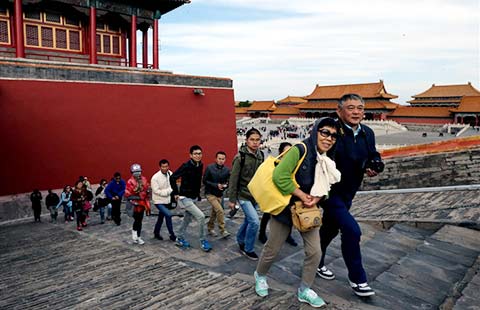
 Palace Museum's western part opens for first time in 90 years
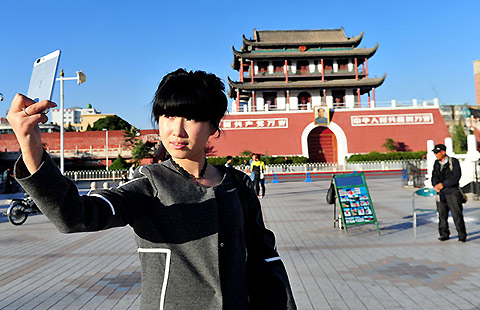 Landmark building inYinchuan resembles Tian'anmen
 Stewardesses trained to show sweet smile
 Dancing to the beat after work
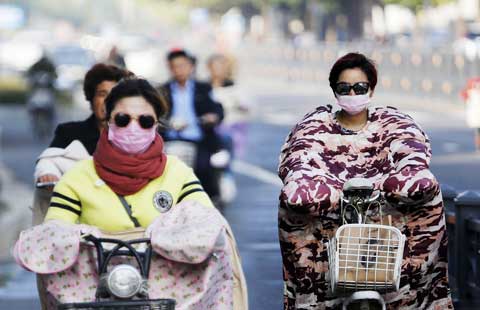 Cold wave sweeps through China
 Robot monk with artificial intelligence makes debut
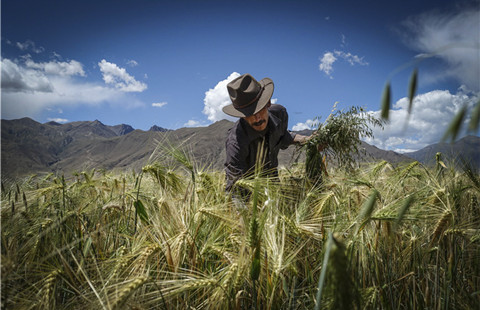 A view from Tibet, the roof of the world
 Smog creeps back to shroud week-long holiday
Copyright 1995 - . All rights reserved. The content (including but not limited to text, photo, multimedia information, etc) published in this site belongs to China Daily Information Co (CDIC). Without written authorization from CDIC, such content shall not be republished or used in any form. Note: Browsers with 1024*768 or higher resolution are suggested for this site.
License for publishing multimedia online 0108263 Registration Number: 20100000002731