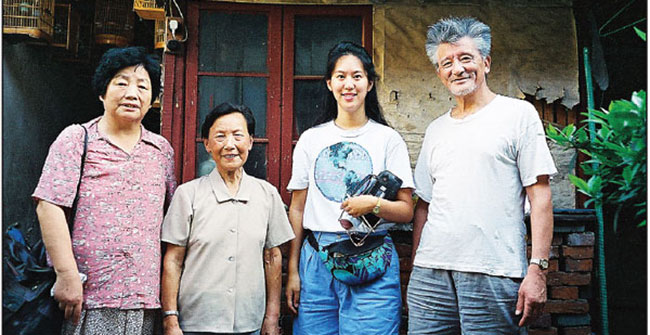
NANCHANG - A little more than a month after sitting gaokao, China's college entrance exam, Zeng Mengyao is celebrating her results with her family.
Zeng will attend Xiamen University in China's eastern Fujian province this fall. However, Zeng's dream to be admitted into a prestigious university would have been crushed without the national preferential policy introduced by the Ministry of Education this year.
According to this year's college admission plan, 12,100 vacancies are allocated for students from 680 poverty-stricken counties in 21 provincial areas. Residents in these counties had an annual per capita income of 2,676 yuan ($418.37) last year, about half the national average.
High school graduates from the impoverished counties are given preferential treatment, a move interpreted by many to counterbalance the country's regional discrepancy in education quality. More than 10,000 graduates from the counties will benefit from the policy this year.
Statistics from the Ministry of Education show that the national average admission rate in some leading universities last year was 8.5 percent, while the number in the 680 impoverished counties was 5.7 percent.
Zeng fell eight points short of the admission score set by Xiamen University, yet she will soon be heading to the university thanks to the new policy.
"I am sure I would not have been admitted by such a prestigious university without this year's special enrollment plan," Zeng said.
Native of Le'an county, 400 km away from the provincial capital city of Nanchang of east China's Jiangxi Province, 19-year-old Zeng grew up in a farming family. Her parents make no more than 1,000 yuan a year. Zeng and her 20 plus family relatives live in a 130-square-meters adobe house built in the 1980s.
Barely able to make ends meet, families in the impoverished counties often send their teenage children to relatively developed coastal provinces, such as Zhejiang and Guangdong, to find a job.
"More than 10 children aged 17 or above in my village toiled in nearby cities , and few can finish their high school," Zeng's mother said.
Statistics from the ministry showed that about 9.15 million people this year sat the college entrance exam to vie for 6.85 million vacancies in the country's universities and colleges, while the number of applicants from poverty-striken regions stood at 1.3 million.
It is estimated that this year's admission rate is 75 percent, which is up nearly 3 percent year on year, and the number of exam takers is down 2 percent.
Rural education, which often lags behind that of the city, reduces the the chances of countryside students attending good universities.
"I have never traveled out of my county since I was born, now, I have the opportunity to see what the outside world looks like," Zeng said, adding that she is planning to find a part-time job in the southern city of Guangzhou during the three-month summer vacation.
Wu Yongming, vice chairman of the Jiangxi Provincial Academy of Social Sciences, said that those who have been enrolled by prestigious universities through the program should be encouraged to go back to their birthplaces to find employment or start a business after graduation, which could bridge the country's east-west gap.


Copyright 1995 - . All rights reserved. The content (including but not limited to text, photo, multimedia information, etc) published in this site belongs to China Daily Information Co (CDIC). Without written authorization from CDIC, such content shall not be republished or used in any form. Note: Browsers with 1024*768 or higher resolution are suggested for this site.
License for publishing multimedia online 0108263 Registration Number: 130349