Comments()
  Print
Print  Mail
Mail  Large Medium Small
BEIJING - Hillary Clinton's whirlwind tour of China's neighbors as part of the US pivot to Asia strategy has made waves again in the South China Sea. The "strategic pressure" is not conducive to Asia's development or US long-term interests.
The US secretary of state's Asia trip, which took her to Afghanistan, Japan, Mongolia, Vietnam, Laos and Cambodia, was nothing but an apparent "diplomatic encirclement".
Though wary of overtly irking China, Clinton further meddled in the South China Sea issue by repeatedly highlighting America's interests there and openly supporting individual ASEAN members' scheme to complicate the maritime dispute.
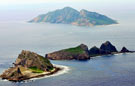
Clinton also extended her hand to the East China Sea, clearly recognizing during the visit to Japan that the Diaoyu Islands fell within the scope of the 1960 Japan-US security treaty, though Washington does not take a position on the ultimate sovereignty of the islets.
Many facts have proved that major changes have taken place in regard to the South China Sea since Washington made a military and economic "pivot" toward Asia, a strategy many interpret as a bid to counteract China's influence in the region.
In the past decades, there has been mainly a lull in the South China Sea issue, as China and other claimant states sought solutions based on bilateral friendly negotiations.
However, at the ASEAN foreign ministers' meeting two years ago, Clinton announced Washington had a "national interest" in the South China Sea and would return to Asia. Since then, tensions have been simmering below the surface.
In particular, China's maritime territorial sovereignty has been severely infringed this year, with the Philippines laying claims to Huangyan Island, Japan's farce in attempting to buy the Diaoyu Islands and Vietnam's enactment of a law asserting sovereignty over the Xisha Islands and Nansha Islands.
The United States claims it does not take a position on the one hand and intensively takes one-sided actions on the other.
Since the dispute over Huangyan Island between Beijing and Manila flared up in April, Washington not only held joint military drills with the Filipinos, but also sold two Hamilton-class warships to them.
Last month, US Secretary of Defense Leon Panetta announced a shift of deployment of the US Navy from its current 50-50 split between the Pacific and the Atlantic to 60-40 by 2020.
As the Chinese saying goes, "the tree craves calm but the wind keeps blowing." Though China always exercises restraint and insists on diplomatic solutions to the disputes, some countries keep challenging China, which certainly has something to do with US re-engagement in the region.
President Barack Obama's strategy to focus US foreign policy more intensely on the Asia-Pacific after a decade of wars in Iraq and Afghanistan is welcome, as long as it is beneficial to the peace, stability and prosperity of the region. However, what the strategic shift has brought in the past two years is evidently contrary to regional stability.
Washington must understand that returning to Asia by way of militarily flexing its muscle, and diplomatically intervening in bilateral disputes is wrong and short-sighted. It is wrong because it is favoring confrontation instead of cooperation, which does not contribute to Asia's development and also goes against US long-term interests.
Americans should do more to promote regional and win-win cooperation rather than mess up peace and development in the Asia-Pacific region.

 Modeling contest part of China-US exchange
 Specially fertilized tea
 Simulator to support A320neo commissioned
 China's cultural sector sees steady growth in 2011
 Travel chaos after snowstorm hits NE China
 Inflation expected to rebound in November
 Grain output grows for 9th consecutive year
 White House-like buildings in E China city
Copyright 1995 - 2010 . All rights reserved. The content (including but not limited to text, photo, multimedia information, etc) published in this site belongs to China Daily Information Co (CDIC). Without written authorization from CDIC, such content shall not be republished or used in any form. Note: Browsers with 1024*768 or higher resolution are suggested for this site.
License for publishing multimedia online 0108263 Registration Number: 20100000002731