 One word entered the mainstream in 2011 more than any other. Some called it China's version of Twitter. Others just used the direct English translation of micro blog. But by the end of 2011, the word Weibo and its phenomenal success were known to all.
Click on the small images above to see who made the cut in our Year in Review.
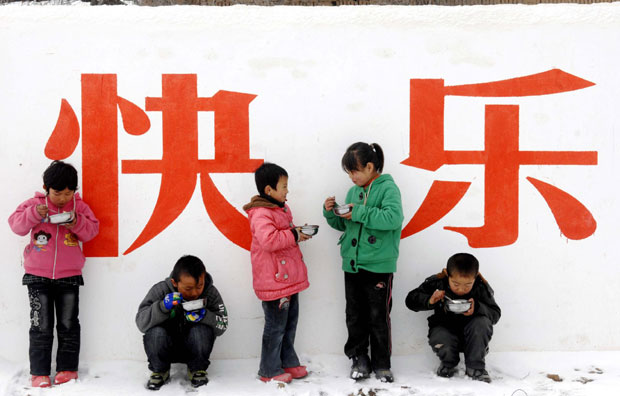 Deng Fei, a veteran journalist, and 500 other journalists, launched the Free Lunch movement on Weibo.com on March 9 as a way to provide free meals for children at impoverished schools. By September 2011, the program had received more than 16.9 million yuan in donations, helping to provide free lunches for more than 10,000 kids in 77 schools. [Read more]
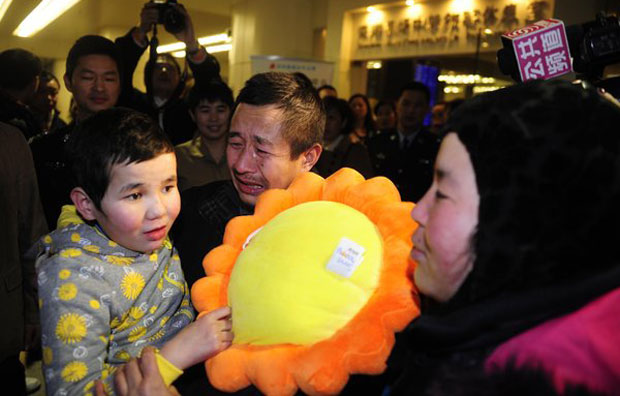 Yu Jianrong, a Chinese Academy of Social Sciences professor, inspired 220,000 Weibo followers and officials to join a campaign to upload photographs of child beggars to help track missing kids. Six abducted children were rescued, and one family reunited after 760,000 messages were posted on the issue. [Read more]
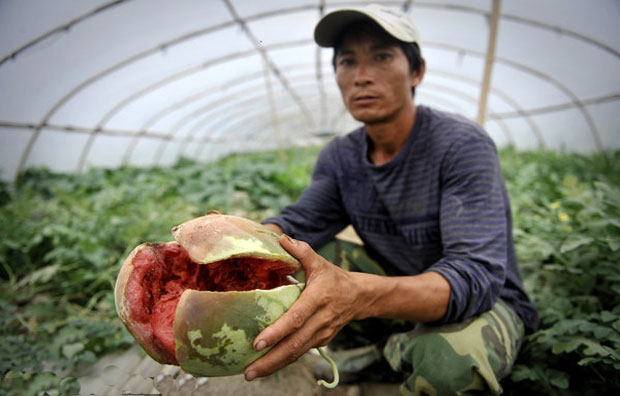 On May 23 watermelon farmer Fu Youlian took to Weibo to plea for help after reports about toxic additives being added to watermelons made it almost impossible for her to sell her stock. Just eight hours after the message was published, it had reached more than 20,000 people and garnered 5,000 comments. Shortly after writing the micro blog she managed to sell her entire supply. Noting her success several farmers, including Shanghai’s information office repeated the sales strategy to equally positive results. [Read more]
 While Weibo is often used for good, sometimes it can backfire. On June 20, Guo Meimei, 20, who claimed to be a general manager for Red Cross Commerce, incited anger on several micro blogs users after posting a photo of herself in a Maserati sports car. The photo had many questioning whether she had bought the vehicle using misappropriated donations and resulted in the number of donations coming into the Red Cross dropping from 1.06 billion to 500 yuan. The Red Cross reacted by using the online platform to increase the transparency of how donated money is used in an attempt to restore credibility. [Read more]
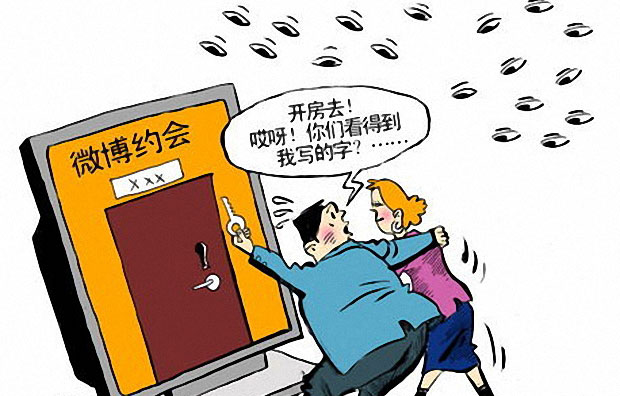 Just 20 minutes after a married civil servant made a live broadcast on a micro blog about his affair with a woman, he was identified by users as Xie Zhiqiang, the director of the health bureau of the Liyang city in East China's Jiangsu province. After posting instructions under the alias "For you 5123" so his secret lover could obtain a keycard to his hotel room, Xie was suspended from his post pending an investigation into the affair. [Read more]
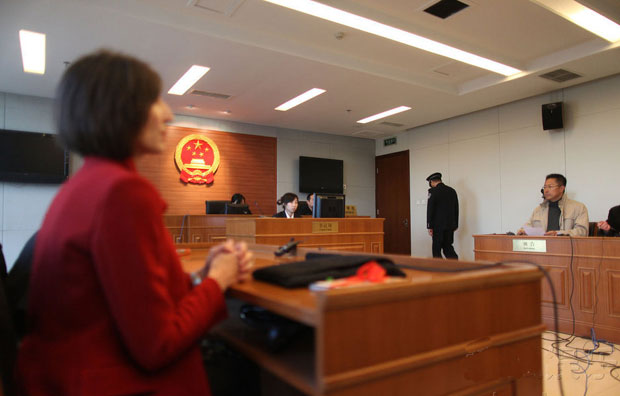 After suffering a physical attack from her husband, Kim Lee, an American married to Crazy English founder Li Yang, decided to give a lesson in domestic abuse by posting pictures of her bruised forehead and bloodied ear on Weibo, sparking a countrywide discussion on the issue. After more than 68,000 users caught wind of the abuse Li Yang made an official apology to his wife on the social networking site before the pair went to court and filed for divorce. [Read more]
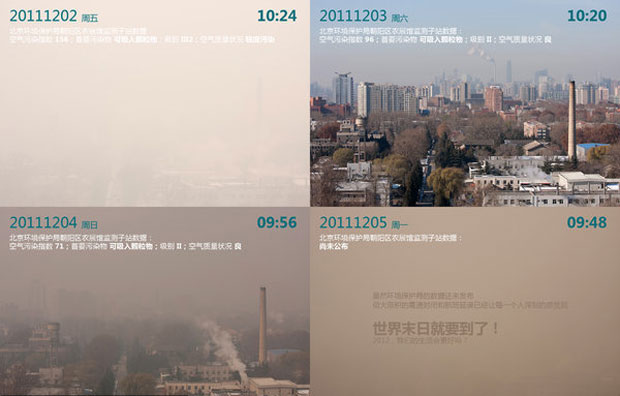 Chinese web users became aware of just how serious the pollution is in Beijing after a Weibo user named "US Embassy Air" posted the first air quality report released by the US embassy to its followers. After seeing the numbers from the embassy read much higher than the official Chinese numbers, users pushed for the Ministry of Environmental Protection to revise the way it measures air pollution. On December 21, 2011, the ministry responded with a timetable of how it would enact the revised monitoring system. [Read more]