Society
Innovative university gets under way
By Chen Jia and Wen Weixin (China Daily)
Updated: 2011-01-25 07:12
 |
Large Medium Small |
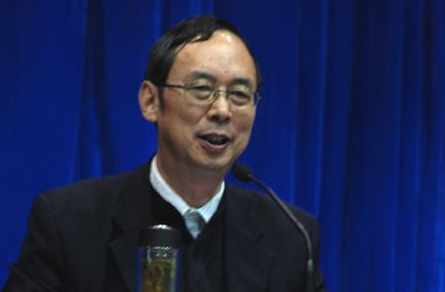
Zhu Qingshi makes a speech at an university in this October 27, 2007 file photo. [Photo/Asianewsphoto]
New system to promote student creativity and postgrad research
SHENZHEN, Guangdong - The experimental South University of Science and Technology of China (SUSTC) began its second round of autonomous enrollment examinations in this southern city on Monday.
For Lin Ruda, a third- grader in high school in Zhanjiang city in South China's Guangdong province, this was an opportunity to realize his university dream by taking a more varied set of exams instead of the cutthroat national college entrance exam.
"I would fail the national college entrance exam because of my poor English," he told China Daily on Monday.
"The South University of Science and Technology of China gives me an opportunity to show my talents in math and physics," he said.
Lin won prizes at national and provincial competitions in math and physics and these gave him the chance to do Monday's test.
"The math test is just like what I do at high school, but the physics test is a little beyond high school requirements," said a girl from Northwest China's Shaanxi province, who refused to be named. She had spent two days traveling to Shenzhen to take the test.
"The English listening test is not easy, and I feel good about English writing since the topic is about the coming Spring Festival," she said.
The three exams - in English, math and physics - lasted from 9 am to 3:30 pm. More than one hundred students sat for the exams.
The experimental university plans to have its first 50 freshmen begin their courses on March 1. The journey to that point has not been easy.
Physical chemist Zhu Qingshi knew he was breaking China's academic conventions and traditions when he began setting up the country's first "autonomous" university.
But it soon became clear he would have to break the law as well if he was to free his staff and prospective students from the shackles of what he saw as an innovation-stifling bureaucracy.
The university announced its enrollment plan on its website on Dec 16. It mainly targets high school science students, who can apply themselves or be recommended by their schools.
However, the Ministry of Education approved the project on Jan 10 - seven weeks ahead of the planned opening on March 1.
"People dislike bureaucracy on campus and the use of single exams to evaluate students," said Zhu, president of the university.
"But it's difficult to change and many of our efforts have challenged existing legal frameworks."
He acknowledged that his decision to start enrolling students last month - without approval from the Ministry of Education - was illegal.
Chinese law requires anyone wanting to open a university to first operate a junior college. Only after this proves successful, will a ministry evaluation committee approve its upgrading to a university.
Becoming a research-intensive university - Zhu's goal for SUSTC- requires decades to qualify for postgraduate and doctoral programs.
"The SUSTC obviously had no time or requirement to go through the full procedure. We needed to bring in the best researchers and the best postgraduates. But without approval to enroll students, that was illegal."
The lack of "requirement" refers to the backing of the Shenzhen government. Deputy Mayor Yan Xiaopei has said that if Shenzhen wants to remain the front-runner in China's economic reform, the city must have a world-class university to exploit its development potential.
Directly under the authority of the Shenzhen government, the university was established in Nanshan district with an investment of more than 2.5 billion yuan ($373 million).
Zhu, also a member of the Chinese Academy of Sciences, said he had many sleepless nights waiting for the official endorsement to get the ball rolling.
"People matter most. Without approval, students and teaching staff felt insecure as they were venturing into unknown territory with me and facing an uncertain future," he said.
"I read the news about SUSTC on the Internet and told my daughter, who performs well in the traditional test-oriented education system," an exam-taker's father surnamed Wang told China Daily on Monday.
"There is too much uncertainty, so she just would like to try it. We haven't put all our hopes on it," he said.
Shenzhen Foreign Languages School third-grader Zhan Wenbin said: "Frankly, I think it's too good to be true. I will apply for the enrollment exam, but the national college entrance exam is still my major objective."
China Daily
(China Daily 01/25/2011 page5)