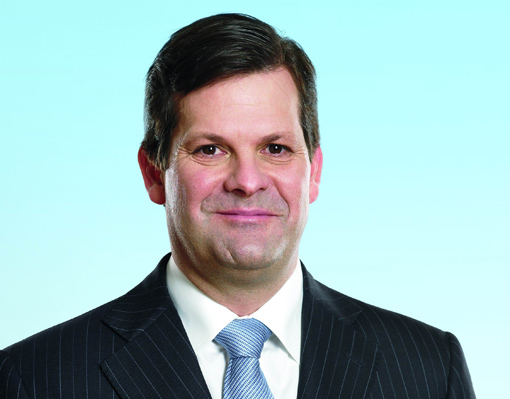
Pierre Beaudoin is president and chief executive officer of plane-maker Bombardier Inc. He studied business administration at Brebeuf College and industrial relations at McGill University in Montreal.
With the highly successful 2008 Beijing Olympic Games now safely lodged in the history books and a sanctioned World Expo opening in Shanghai next month, China continues to impress the world.
It is a nation that can extol its glorious past while pointing with equal pride to a glorious future now unfolding on the grounds of World Expo 2010. I extend my heartfelt congratulations to Shanghai's citizens and leadership for being chosen to host Expo 2010, and for being the first Chinese city to ever land an international exposition of this caliber.
Under the banner "Better City, Better Life," Expo 2010 is the first exposition to celebrate the city. I cannot help being reminded of Expo 67, with its theme "Man and His World," which was hosted in 1967 by my home city of Montreal. In my mind the two themes are linked, as they both express a hopeful vision. Both subscribe to the notion that human progress is possible and that this is best embodied in the world we create and the cities we build.
The legacy of Expo 67 lives on in dozens of buildings, parks and facilities - including Montreal's subway system. But I believe its greatest impact was on our civic pride.
Playing host to millions of people from every corner of the globe and experiencing countless wonders of technology and culture gave Montrealers a sense of belonging to an international community.
How very appropriate for our times that Shanghai has chosen the city for its theme. For in my view, the exposition itself is a city in microcosm, where people from many walks of life and backgrounds come together to create something greater than the sum of their individualities.
Shanghai itself is over a thousand years old, and China boasts a wealth of ancient cities - some of them many thousand years old and still vibrant and growing - that could well serve as models for how communities live and grow together. In 1200, when Florence and Venice were Western Europe's largest cities and had populations of 75,000 each, Hangzhou, during the Song Dynasty (960-1279), was home to 2.5 million people, while two other Chinese cities counted 350,000 among their citizenry.
Historians tell us that it takes enormous resources and technology to enable cities to grow to this scale. Chinese cities have in fact been for thousands of years the crucible for major advances in technology and innovation, made possible by access to higher education, a shared prosperity and peaceful coexistence.
There is another and certainly more pressing reason why the theme of the city is so pertinent. According to the latest demographic reports, we have just crossed a historic threshold: More than 50 percent of humanity now resides in urban settings. By 2030, the world's urban population will reach 5 billion, or 60 percent of the total population. Indeed many of the world's largest cities dwarf the populations of major countries: New Delhi, home to 14 million people, is almost twice as populous as the entire country of Sweden, and Shanghai's nearly 20 million people represent close to two-thirds of Canada's population of 33 million.
All of which brings us back to the theme "Better City, Better Life." With the majority of the world's people now converging on cities, the solutions we devise for managing these urban settings - particularly large ones - will be critical for all humankind. By solutions, I mean answers to urgent questions about how we provide decent housing and efficient transportation, how we manage water and energy use, and how we address environmental challenges such as air and water emissions. These solutions will influence a host of equally critical needs, including education, technology and innovation.
In this historic moment, therefore, China's and Shanghai's leaders have demonstrated extraordinary perception in choosing to focus on the theme of the city, for the city remains, as in the past, a living laboratory. The city is where we test new ideas about how to live peacefully and prosperously with one another. I therefore have high expectations for Expo 2010, for it, too, is a living laboratory of all that is best in the world.
My company's long association with Shanghai and China, during which I've made countless good friends in this country, taught me a great deal about the Chinese spirit of innovation, entrepreneurship and hospitality. I am particularly proud of our partnerships over several decades, which have contributed to the advance of Chinese cities, including Shanghai's, through the development of modern rail transportation systems and a homegrown aerospace industry.
Based on my experience with the Chinese people, I expect that Expo 2010 will serve as a milestone for future generations, marking the time when Shanghai entered a period of prominence even greater than it occupies today - a period that I like to refer to it as its golden age.