Foreign and Military Affairs
Exclusive Interview with Ashton: China, EU may meet more 'difficult moments'
By Fu Jing (chinadaily.com.cn)
Updated: 2010-08-29 23:10
 |
Large Medium Small |
Before Catherine Ashton, High Representative of the European Union for Foreign Affairs and Security Policy Vice President of the European Commission flew to China for a one-week visit, she accepted a written interview exclusively with Fu Jing, China Daily Chief Correspondent in Brussels.
Following is the full script of the interview:
Both progress and challenges impress Ashton
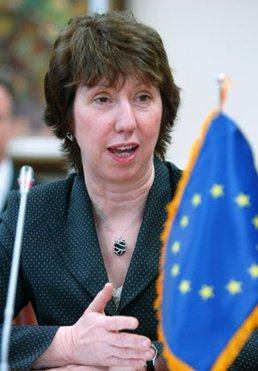 |
| Catherine Ashton |
China Daily: This is the second time for you to visit China this year after your May visit in Shanghai. What was your first contact with this country? How was that? So far, what has impressed you most in China, both from a positive and negative perspective?
Ashton: I have been following China's amazing development for years and had an extremely interesting first visit to the country in September 2009 in my capacity as European Trade Commissioner. I have travelled to China's urban centres, the most developed parts of the country. I am very impressed by the scale of Chinese cities such as Beijing and Shanghai, and by the progress that this country has visibly achieved over the last three decades. But rapid development is often accompanied by challenging tasks: how to manage pollution, pressure on public services and demographic shifts. In Europe we face similar issues but the sheer size of China makes them all the more daunting.
Ashton excited to see China's countryside
China Daily: You are going to meet State Councillor Dai Bingguo in Guiyang. What are the major talking points when you meet with him? Any other leaders you are going to meet? What are the major topics on the negotiation table?
Ashton: I am excited about visiting Guiyang. Last May in Shanghai, when State Councillor Dai and I agreed to set up a strategic dialogue we decided that the opening session should take place far away from the glittery skyscrapers of China's major cities. I wanted to visit China's countryside, where two-thirds of Chinese people live. Councillor Dai kindly suggested hosting the meeting in his native province of Guizhou. Additionally, in Beijing, I will see Premier Wen Jiabao and Foreign Minister Yang Jiechi. I want to hold a close and frank dialogue with Chinese leaders and discuss a broad range of issues. The EU and China hold a strategic partnership. That means that we will not only talk about bilateral relations, but also about the main challenges the world is facing today.
The big question for all of us is what sort of world the next generation is going to live in. Part of China's success comes from the open global economy with common rules. If this system is going to continue it needs active efforts by all the important countries – and of course China is now one of the most important ones. This is true in trade, but it is also true in the area of banking, security and the environment.
|
||||


China Daily: Based on my research, I found that "mounting mistrust" is a widely used expression to describe the status quo of bilateral relationship between China and Europe and many believed the Sino-Europe relationship's honeymoon was over. How severe is the mistrust ? Do you have the political will to put the two sides onto such a so-called honeymoon track again? If so, what are the major obstacles and challenges to turn such a will into reality?
Ashton: We have come a long way since we established relations 35 years ago. Our economic and trade relationship in particular has expanded from virtually nothing to one of the most important in the world. Our cooperation has also expanded in other areas, including transport, science and culture. Today, EU-China cooperation and exchanges form a rich tapestry of interwoven issues and interests. Inevitably, a relationship such as ours needs constant attention if we are to maintain and build confidence. We need to communicate – to speak frankly – to exchange ideas and to recognise there have been and will be some difficult moments as our relationship matures. That is why I am in China this week, to coordinate closely our policies and to develop further our cooperation on important international issues.
China faces manifold challenges
China Daily: China is going to take over Japan to become the world's biggest economy. Some then proposed to remove China's status as developing economy. What do you think of it?
Ashton: China has developed very fast over the last three decades. Since it joined the WTO in 2001 its economy has shifted gears. This process has created disparities between coastal and inland areas as some parts of the country were better poised to benefit from economic globalisation. China may be country with double-digit export growth rates and a huge trade surplus, but at the same time it faces manifold challenges: poverty, pollution and under-delivery of public services.
Urging China to further open market
China Daily: The EU is well prepared to announce new foreign policy framework towards China and the emerging economies. Some argued that the EU has regarded it in a disadvantaged position during the process of economic globalization and it will announce tougher economic and trade policies toward China and those new economies. Is that true? Is there any timetable to announce a new foreign policy framework towards China and other emerging economies?
Ashton: The European Union is one of the most open economies in the world. The fact that the EU is China's main export destination and China is the EU's largest source of imports speaks out for our openness towards emerging economies such as China's. On the other hand, last year the EU still exported more to Switzerland, which has less than 10 million inhabitants, than to China. While some degree of imbalance is inevitable, our economies are complementary and a more harmonious balance should be our shared objective.
During the global financial crisis we have not only kept our markets opened to emerging economies, especially in Asia, but we have also shown our will to open them further by pressing ahead with free trade negotiations with South Korea, India, Singapore and Vietnam.