Hot on the Web
Name-listed ticket system remains to be tested
By Xin Dingding (China Daily)
Updated: 2010-02-09 07:09
 |
Large Medium Small |
Name-based system hailed a success by New Year travelers
After a trial period, a majority of passengers leaving Guangdong province in the peak traffic season of the Spring Festival praised the name-based train ticket system for its fairness and called for it to continue in the future.
However, a spokesman for the Ministry of Railways said it remains to be seen whether the pilot project will continue next year and whether it will go nationwide.
Trains departing from major railway stations in Guangdong between Jan 30 and Feb 13 required travelers to provide ID certificates when purchasing tickets and boarding the trains.
By Sunday, 4.11 million train tickets with ID information had been sold, Guangzhou's traffic authority said yesterday.
Local surveys found a majority of passengers supported the name-based ticketing system, whether or not they were successful in purchasing a ticket.
An ongoing survey by Sina.com.cn, a major Web portal targeting those who tried to buy tickets under the new system, found that 60 percent of those surveyed believed the pilot system is more convenient.
Only 21 percent said it is not convenient at all and another 19 percent said there is not much difference than before. The survey has attracted at least 1,000 respondents.
Even those who failed to get tickets under the pilot project supported the name-based system.
Zhou Weiying, of Dazhou, Sichuan province, who works in Guangzhou, said: "We cannot get the tickets. Neither can the scalpers. As long as this system made it difficult for the scalpers, it is a success."
Hao Jingsong, a Beijing-based lawyer known for challenging the Ministry of Railways, said the name-based ticketing system helped many workers to achieve equality.
But the name-based ticketing system cannot root out all scalpers, nor can it solve the shortage of train tickets, he added.
Media reports said scalpers "with inside connections" could still provide tickets that are unavailable at the railway station's ticket windows.
Moreover, many scalpers now go online in a bid to avoid the risk of being caught by the police.
An anonymous scalper, who solicits customers online, said it is no longer necessary to meet ticket buyers.
"It is all digital now. You and I do not need to meet. Just text me your ID number, name, ticket requirement and phone number. After I get the ticket, you pay me through an online bank. Then I will give you the order number and you can get the ticket at the railway station's ticket window," the scalper told People's Daily.
The ministry is resolute to crack down on inside scalpers, with measures including firing any railway employee found involved in scalping and forbidding ticket sellers from taking their cell phones and money with them to work.
"The ministry should open more information to the public in order to totally stem scalping," Hao said.
A widespread online post suggested train tickets should include information such as the ticket seller's employee ID number, so that tickets bought from scalpers can help railway authorities trace the inside scalper.
The name-based ticketing system has been under debate for years, as each year people face ticket shortages in the 40-day Spring Festival period. This year 210 million passengers are forecast to travel by train during the peak traffic period.
While the public believe the name-based system could stop scalpers and make tickets easier to buy, voices against it said the system could not solve the overall problem of ticket shortages.
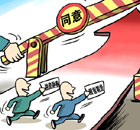
Last month, the ministry suddenly launched the pilot name-based ticketing system, because of "calls from the public for the real-name system", said ministry spokesman Wang Yongping.
"The trial will establish the public pros and cons of the name-based ticketing system. Whether the system will be implemented across the country will be decided by travelers, especially those who experienced it," he said on Sunday.
However, the ministry has yet to reveal how and when it collates public opinion.