CHINA> Regional


|
CHINA> Regional
|
|
Farmers selling blood to make ends meet
By Lan Tian (China Daily)
Updated: 2009-11-05 08:14
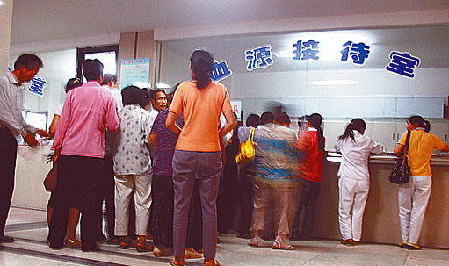
More than 6,000 poverty-stricken farmers in Central China's Hubei province are selling their blood on a routine basis to make extra money, with some saying it's the only way they can earn enough money to pay bills. Many have been selling their blood regularly for years to make ends meet. Presently, nearly 6,400 local farmers sell their blood - 600 cc at a time - every two weeks at the blood plasma collection station authorized by the local health bureau in Yunxian county. The farmers earn 168 yuan ($25) each time. Nearly 20,000 people have sold their blood at the station since it was established 11 years ago, China Youth Daily reported yesterday. The money earned is considered a "nutrition and traffic subsidy," according to officials. Located alongside the Han River, Yunxian has been listed as a poverty-stricken county for decades by the central government.
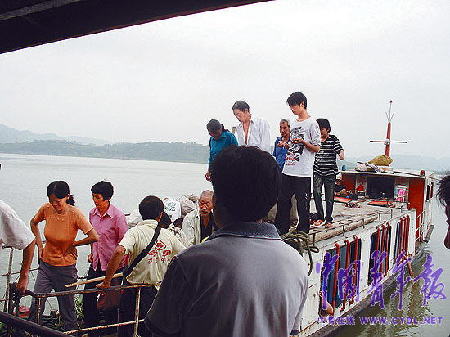
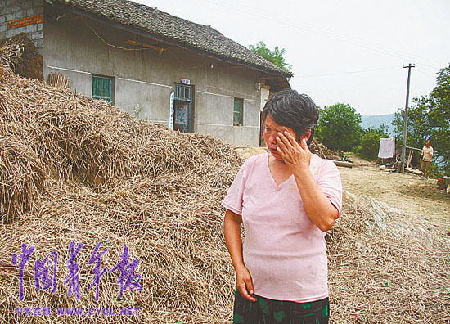
"If it were not for the blood donation, we could not make enough money to support my son," the reported quoted Gao, 51. Zhou Wenfen, 53, from Yangjiagou village, started to sell her blood regularly in 2007 when her 3-year-old grandson was diagnosed with aplastic anemia. Each time she sells her blood, she wakes up at 4 am, spends more than an hour to climb a mountain, travels down the Han River by boat for hours, and then arrives at the station around noon, the report said. "I have no other choice. I just want to get more money for my grandson for whom we have spent nearly half a million yuan in medical bills," she said. An official with the blood plasma collection station who only gave her surname as Chen told China Daily yesterday: "What the report said about nearly 6,400 regular donors and the subsidy are true." "But the station's establishment and management including the subsidy are all in accordance with relevant laws and standards," she noted. "We cannot forbid farmers from donating blood only because they come here for the subsidy," she said.
The station was set up in 1998 by Li Guangcheng, former deputy director of the county health bureau and head of the station now, she said. Every year, the station receives about 60,000 packages of donated blood and pays out about 10 million yuan to donors, Li was quoted by China Youth Daily as saying. Li refused to be interviewed yesterday. Local health bureau officials also could not be reached. China implements an uncompensated blood donation system, in which healthy citizens aged 18 to 55 are encouraged to donate blood voluntarily. Relevant government departments or units can subsidize donors, according to the country's Blood Donation Law that went into effect in 1998. No more than 600 cc of blood can be collected each time. Donors are not allowed to donate more than once every two weeks, according to the Ministry of Health's blood plasma collection station administrative measures that took effect last March. One health expert said that donating blood frequently is safe, if the procedures are followed properly. "Regular donations would not harm farmers' health if its operation conforms to the national standards and laws," Tan Xiaodong, professor with school of public health of Wuhan University, told China Daily yesterday. "But instead of donating blood, the Yunxian county government and local farmers should take more active measures to change their poverty-stricken life," he said. China has underground blood collection and supply gangs, which have been blamed for the spread of HIV/AIDS among people in the rural areas of Central China in the mid-1990s. |
|||||||||||||
靖安县|
北海市|
丰都县|
陆良县|
玉林市|
奉化市|
佛学|
南华县|
平乐县|
开化县|
同仁县|
万盛区|
辉南县|
甘德县|
新干县|
鸡泽县|
潮安县|
廊坊市|
衡阳市|
保亭|
恩施市|
昌江|
固始县|
和硕县|
万年县|
贡嘎县|
延吉市|
普定县|
玉田县|
长泰县|
壤塘县|
通道|
三明市|
武鸣县|
清涧县|
长海县|
桑植县|
龙陵县|
时尚|
松江区|
余干县|