CHINA> National

|
CHINA> National
|
|
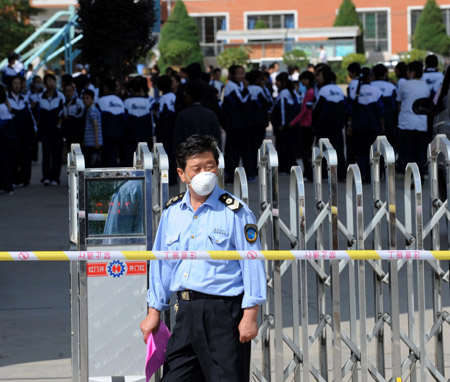
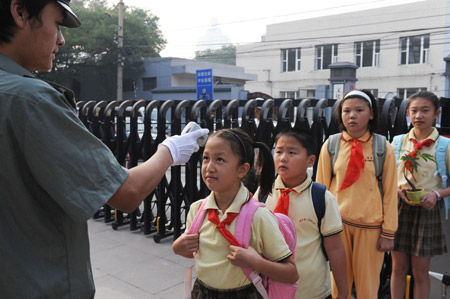
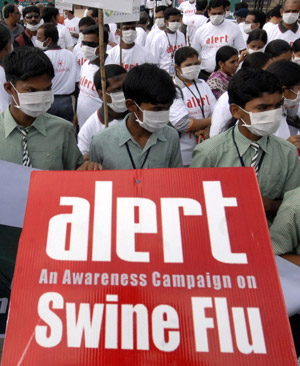
WHO: School closure can slow flu spread
(Xinhua)
Updated: 2009-09-12 14:20 GENEVA - School closure, if adopted timely and properly, can effectively slow down the spread of the A/H1N1 flu virus, the World Health Organization (WHO) said on Friday. "School closure can operate as a proactive measure, aimed at reducing transmission in the school and spread into the wider community," the UN agency said in a news briefing posted on its official website.
According to the agency, the main health benefit of proactive school closure comes from slowing down the spread of an outbreak within a given area and thus flattening the peak of infections. "This benefit becomes especially important when the number of people requiring medical care at the peak of the pandemic threatens to saturate or overwhelm health care capacity," it said. By slowing the speed of spread, school closure can also buy some time as countries intensify preparedness measures or build up supplies of vaccines, antiviral drugs, and other interventions, it added.
But the timing of school closure is critically important. Modeling studies suggest that school closure has its greatest benefits when schools are closed very early in an outbreak, ideally before one percent of the population falls ill. Under ideal conditions, school closure can reduce the demand for health care by an estimated 3050 percent at the peak of the pandemic. However, if schools close too late in the course of a community-wide outbreak, the resulting reduction in transmission is likely to be very limited.
Policies for school closure also need to include measures that limit contact among students when not in school. If students congregate in a setting other than a school, they will continue to spread the virus, and the benefits of school closure will be greatly reduced, if not negated. Governments should also take into consideration the economic and social costs of school closure when dealing with an outbreak, the WHO said. The main economic cost arises from absenteeism of working parents or guardians who have to stay home to take care of their children. In addition, school closure may also disrupt the provision of essential health care, as many doctors and nurses are parents of school-age children. |
武功县| 雷山县| 高清| 磐石市| 青阳县| 垦利县| 十堰市| 栖霞市| 康平县| 太原市| 吉隆县| 翁源县| 靖江市| 棋牌| 沐川县| 黄梅县| 庐江县| 三江| 尼木县| 浮梁县| 广平县| 重庆市| 罗源县| 崇信县| 莱芜市| 盐池县| 茌平县| 陕西省| 寿宁县| 边坝县| 舟山市| 白玉县| 保德县| 上思县| 藁城市| 吉安县| 从江县| 教育| 新建县| 西林县| 香港 |