CHINA> Focus

|
CHINA> Focus
|
|
Firms in fight to shake off 'China Inc' image
By Chang Ailing (China Features)
Updated: 2009-06-19 10:59 After a week of mixed fortunes for State-owned firms involved in major international acquisitions, industry analysts have warned the nation's CEOs will have to shrug off their "China Inc" tag before they can make any significant expansion into the West.
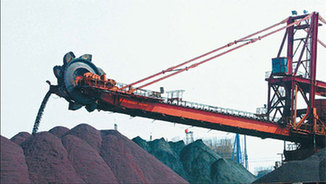
But it did little to erase the memory of Chinalco's failure to gain an improved stake in mining giant Rio Tinto just days earlier. If successful, it would have been China's largest foreign investment. Chinalco would have paid $12.3 billion for stakes in debt-saddled Rio's key iron ore, copper and aluminum assets, and $7.2 billion for convertible notes that would double its equity stake in Rio to 18 percent, Reuters reported. The offer was opposed by the Rio Tinto shareholders, who were worried China, Rio's biggest customer, would gain influence over pricing of key commodities like iron ore. In the end, Rio Tinto, which has head offices in London and Melbourne, snubbed the $19.5-billion offer and pumped for a joint venture with former rivals BHP Billiton.
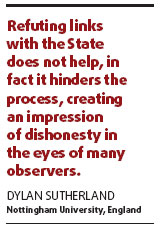
The failed bid raised serious questions over the challenges Chinese enterprises face when attempting expansions overseas, say experts, especially as they are often perceived as government vehicles. "There will always be political pressures on big business investing overseas," said Dr Dylan Sutherland, a scholar in contemporary Chinese studies at Nottingham University in England. "Chinese enterprises have to accept, being State-run companies, any offer they make will need to be very attractive. "How to break these 'China Inc' perceptions? There is simply no easy way to mitigate these risks, other than perhaps being more upfront about them.
A statement from the Ministry of Industry and Information Technology (MIIT) said on Tuesday the alliance between Rio Tinto and BHP Billiton had a "strong monopolistic color", and that Chinese firms would be watching closely to find ways to cope with it. China imported 440 million tons of iron ore last year, half of the world's total, which means any change to the market, albeit slight, would have a knock-on effect for the nation's steel manufacturers. "Anti-monopoly laws in China should apply to the proposed deal," said Chen Yanhai, head of the raw material department of the MIIT at an industry meeting in Anshan, Liaoning province, recently. If the joint venture proves to be monopolistic, "we will seek new policies and regulations to allow Chinese companies to have a bigger say in iron ore pricing", said Chen, without elaborating on how this would be achieved. Ministry of Commerce spokesman Yao Jian backed the comments on Monday, adding if the revenue from the Rio Tinto-BHP Billiton deal reached "a certain amount," China's anti-monopoly law would come into play. The rules stipulate a company must get approval from the central government before consolidation if its global revenue exceeds 10 billion yuan ($1.4 billion) and its revenue in China exceeds 2 billion yuan. Many industry analysts, when talking about the failed Chinalco deal, have referred to a similar scenario in 2005, when political obstacles blocked China National Offshore Oil Company's (CNOOC) $18.5-billion attempt to buy Unocal, at the time a major petroleum enterprise based in the United States. |
周宁县| 淮阳县| 洞口县| 莱西市| 新沂市| 元氏县| 威远县| 天长市| 台湾省| 迭部县| 嘉鱼县| 洪洞县| 浪卡子县| 永川市| 太仓市| 和政县| 博兴县| 延边| 韶山市| 峨边| 新泰市| 合作市| 文成县| 小金县| 通化县| 中方县| 沙湾县| 新民市| 神农架林区| 武川县| 慈利县| 剑川县| 平定县| 石城县| 南宁市| 蓝田县| 新竹县| 包头市| 青浦区| 霍邱县| 株洲县|