CHINA> Regional

|
CHINA> Regional
|
|
New mechanism helps protect Taihu Lake
By Qian Yanfeng and Qiu Quanlin (China Daily)
Updated: 2009-03-10 07:45
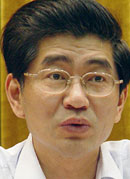
Since Taihu Lake's blue-green algae outbreak disrupted drinking water supplies to about 1 million people in Wuxi nearly two years ago, Mayor Mao Xiaoping is often asked about the city's measures against water pollution. This year's top policymaking sessions are no exception, as the water in northern Jiangsu province's Yancheng city was discovered late last month to have been contaminated with highly toxic carbolic acid from a local chemical company. So Mao has been facing a fresh round of inquiries about how to prevent such incidents from reoccurring and rising above the vicious circle of achieving economic development at the environment's expense. While realizing there are no easy answers, Mao has not turned away from the challenge. He faces journalists' interrogations with a candid and steadfast composure.
Minister of Environmental Protection Zhou Shengxian told reporters more blue-green algae outbreaks will likely occur again in Taihu Lake within the next decade. "The scale of the algae outbreak may be different every year, thanks to intensified efforts to improve the surrounding environment," he said on Saturday.
"We have introduced an effective emergency mechanism for tackling water pollution," he said.
Wuxi's Mao also said: "The most important thing for the government is to face realities, learn from mistakes and try to prevent it from ever happening again. It is a harsh learning curve." The Wuxi government's efforts to clean up Taihu - China's third-largest freshwater lake - could illustrate the way in which consistent government efforts to protect the environment have paid off, Mao said. Mao said Wuxi has pumped more than 13 billion yuan into Taihu Lake's treatment and protection over the past two years. This year, the investment will exceed 10 billion yuan. Consequently, water quality has "stabilized" and is "improving steadily", with phosphorous and nitrogen levels having decreased by large margins, Mao said. The government has also appointed more than 800 officials as "caretakers" of the rivers and lakes that flow into Taihu, he added. "They would be held directly responsible for any pollution threatening water quality," Mao said, adding he has assumed personal responsibility for a large river, for which his annual goal is "zero discharge". Chemical pollution has also been reined in. Jiangsu's governor Luo Zhijun said the lake's water quality had generally improved because of recent years' pollution control measures. "Efforts have been made to treat and cut pollution discharges into the lake," Luo said. Up to 4,300 nearby chemical plants were closed last year, he added. In addition to protecting marshland and planting trees, industrial upgrading is also gaining new momentum in the preservation area. Wuxi had traditionally been an industrial city heavily skewed toward chemical production but now is hinging its bets on the service sector's development. But Mao pointed out Taihu Lake's protection requires coordinated efforts from nearby cities in Jiangsu and Zhejiang provinces, and Shanghai municipality. That is why the "environmental compensation mechanism" pilot program was introduced in the area last year. According to the scheme, cities in the upper reaches of the lake's water supply should pay southern neighbors for pollutant discharges exceeding the limit. The first compensation was finalized in the third quarter of 2008. The provincial capital Nanjing paid 18,000 yuan to Changzhou, with Changzhou then paying 180,000 yuan to neighboring Wuxi. Wuxi had expanded promotion of the compensation mechanism to its river systems, Mao said. "The purpose is to make clear who should be held responsible and hopefully deter polluters from repeating their mistakes," he said. "Wuxi wants to do its best to protect Taihu Lake." |
萨迦县| 正阳县| 淮安市| 宜都市| 大悟县| 抚州市| 黄浦区| 新平| 吉隆县| 那坡县| 昌乐县| 密山市| 桃园市| 渝中区| 石门县| 霍州市| 社会| 普宁市| 邳州市| 江孜县| 长岛县| 疏附县| 当阳市| 高清| 富顺县| 宝清县| 台江县| 神池县| 谷城县| 东乌| 于都县| 临泽县| 博兴县| 宜君县| 塔河县| 蓬安县| 科尔| 宁阳县| 乃东县| 翁牛特旗| 连平县|