CHINA> National

|
CHINA> National
|
|
Dealers turn to pawnshops as loans dry up
(Xinhua)
Updated: 2009-02-19 22:50 SHANGHAI -- When Chinese businessman Roger Zhang needed a bridging loan for his steel company, he went to a pawn shop to get a cash flow injection to keep his business afloat.
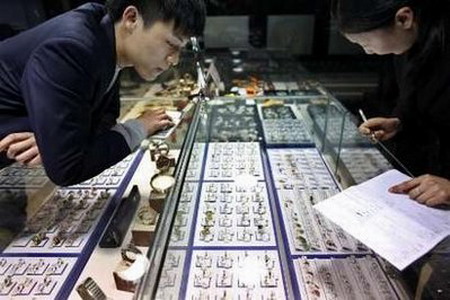
Turned away by banks caught in the credit crunch, Roger, like many Chinese businessmen, borrows from pawn shops instead. In this case, he paid off the loan a few days later when a customer made payment on a big steel purchase. "The financial crisis has an obvious impact on our businesses. There's a shortage of liquidity in the market," said Zhang, whose business is in Wenzhou, in eastern China. With China's economy stumbling along at its slowest growth in seven years and banks wary of lending as defaults rise, small business operators are hocking belongings and company assets for loans from pawn shops. "Banks are reluctant to lend," said Huang Jing, deputy business manager at Shanghai Oriental, the city's second-biggest pawn shop. "But we have a lower threshold and can provide loans much more quickly and with shorter terms". Banned at the start of the cultural revolution, pawn shops were considered a form of capitalist exploitation preying on poor and desperate people. They remained outlawed for two decades, until 1987, but they are now doing a brisk trade. From gold bullion to houses and factory equipment, customers are offering all sorts of assets to get loans from pawn shops. An auto dealer pawned his downtown apartment against a 4 million yuan ($585,000) credit line to secure funds for his business. A real estate developer gave his unsold properties as collateral to get an emergency loan while waiting to secure bank funds. And a construction company owner hocked his villa to get a loan to pay workers' salaries. They are all typical of a growing number of business owners in China taking out pawn shop loans to maintain cash flow as an economic slowdown hurts sales and as banks become more cautious towards small lenders. "The financial crisis has squeezed liquidity, and many companies face an acute shortage of cash. That's why demand has increased," said Martine Ma, general manager of Shanghai Hengtong Pawn Broking Co. "On the other hand, risks have also increased." Risks, Rivals At pawn shops, as well as banks, loan defaults are on the rise. Thousands of small businesses in China have folded in the global downturn, which has sent China's exports plummeting by 17.5 percent in January compared to a year earlier. Meanwhile, the value of many items used as collateral for pawn shop loans, such as gold and copper, has plunged. Pawn shops also face intensified competition as the government hands out more licences and encourages the development of other non-bank lenders, such as small loan companies, to support China's struggling private sector. |
武胜县| 孝昌县| 延安市| 台北市| 巴楚县| 芷江| 同德县| 镇康县| 鹿邑县| 武义县| 定兴县| 历史| 陇西县| 衡南县| 苍南县| 隆林| 钦州市| 海安县| 靖边县| 梁平县| 山西省| 思茅市| 上犹县| 临洮县| 马鞍山市| 鸡东县| 屯门区| 青田县| 贡嘎县| 四子王旗| 周至县| 松阳县| 潼关县| 大同市| 潼南县| 富蕴县| 桐城市| 丰顺县| 嘉义县| 饶河县| 宁津县|