CHINA> Regional

|
CHINA> Regional
|
|
Earliest man-made cave houses unearthed
(Xinhua)
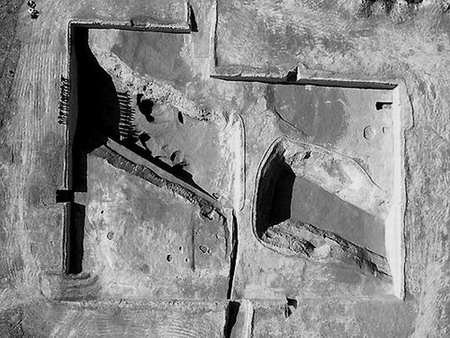
Updated: 2009-01-25 13:47 XI'AN -- Archaeologists have unearthed the earliest man-made cave houses and privately-owned pottery workshops in China which date back 5,500 years.
After four years of excavation, a row of 17 cave houses were found on a cliff along the Jinghe River in northwest China's Shaanxi Province, Wang Weilin, deputy director of the Shaanxi Archaeology Institute and chief archaeologist of the excavation, told Xinhua. They were built between 3,500 to 3,000 BC, near the Yangguanzai village of Gaoling county, 20 km away from the provincial capital Xi'an. Wang said the row of houses are within a 16,000-square-meter site which is being excavated. The cave houses belonged to a late Neolithic culture named Yangshao. It originated in the middle reach of the Yellow River and was considered a main origin of Chinese civilization. Yangshao is best known for red pottery ware with painted patterns and animals. Each cave house, with an area of about ten square meters, was divided into two rooms. One was dug into the cliffside, the other, possibly made of wood and mud, was built on the outside of the cave, Wang said. Archaeologists also found pottery kilns and caves to store pottery beside the houses as well as pottery wares, fragments and tools. "Most of the cave houses had a pottery kiln beside it. We believe these cave houses were homes to families of pottery makers," Wang said. In previous excavations of Neolithic settlements in China, one pottery kiln was usually used by all families, he said. "Here we found the earliest evidence that a certain group of people were specialized in making pottery, a sign of division of labor." Caves storing pottery also show private ownership of property had emerged, Wang added. North of the cave houses, archaeologists also discovered sections of a moat averaging six to nine meters wide. Pottery unearthed from the moat's bottom showed it also belonged to the Yangshao culture from between 4,000 to 3,500 BC. "To dig it, lots of laborers must have been mobilized. Without an effective social mechanism, it would be hard to build a project like this," Wang said. A area covering 245,000 square meters inside the moat, equal to about the size of 46 American football fields, has not been unearthed. "We haven't excavated the settlement inside the moat but its scale was seldom seen at this age," Wang said. "As far as I know, the area inside the moat could be the largest and best preserved among settlements of this age," said Prof. Yan Wenming, a history expert with the School of Archaeology and Museology at Peking University. There were several other settlements of the same age nearby the discovery, but they were much smaller. "This one was very much likely to be an ancient town," said Wang. |
泾源县| 枣庄市| 崇州市| 九寨沟县| 应用必备| 江城| 安多县| 台江县| 连平县| 黄梅县| 通化市| 中西区| 通海县| 横峰县| 平谷区| 甘孜县| 奉贤区| 吐鲁番市| 两当县| 成武县| 阳高县| 田阳县| 秦皇岛市| 师宗县| 太仆寺旗| 习水县| 容城县| 阳新县| 特克斯县| 高密市| 麟游县| 乌拉特前旗| 平顺县| 济宁市| 宜宾县| 涿鹿县| 龙岩市| 成都市| 类乌齐县| 丽水市| 信阳市|