CHINA> National

|
CHINA> National
|
|
No threat from military development
By Wu Jiao and Peng Kuang (China Daily)
Updated: 2009-01-16 07:37
The People's Liberation Army (PLA) will not engage in any arms race and its development does not pose a threat to any country, a senior military official has said.
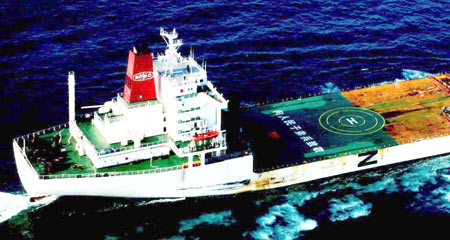
The Chinese military has strengthened its power along with the country's robust economic growth in recent years. On Dec 26 last year, China sent two destroyers and one supply ship to escort merchant ships in the pirate-infested waters of Somalia, the first time the country has sent troops far afield to perform military escort missions since 1949. Speculation arouse that China was building up its military power, changing its defensive policy and aiming to expand its military presence worldwide. Huang refuted the speculation, saying that China would never waver from a defense policy that is defensive in nature. "The Somali mission shows China's efforts to undertake its international obligations as a permanent member of the UN Security Council and our determination to preserve regional stability and peace. Of course, it also demonstrates our confidence in the PLA's handling of various security threats and accomplishing of diversified military missions," Huang said. "But it never signaled that we were deviating from the defensive policy. We also tell the world candidly that the Chinese defense policy is always defensive in nature'," he said. "A defensive policy has been consistent in China. It is decided by the national interest, social system, foreign policy and historical and cultural traditions of our country, and fits with the peaceful development of the world. It's not a makeshift stance, but something we will never change," Huang said. The modernization of the Chinese armed forces is aimed at preserving national sovereignty, security and reunification of the country, he said. "China has always advocated developing military cooperation and relationships based on principles of peaceful coexistence, characterized by non-alliance and non-antagonism," Huang said. Huang also dismissed speculation that China is raising its military budget substantially to prepare for more military expansion. To strengthen its military power, China has been raising its military budget regularly these years. Huang said the rise was in line with the "normal demand of China as a developing nation to fill the obligation of a large country, and as a permanent member of the United Nations Security Council". "The rise is also in line with the demands of developing our military in a modern way for the sake of national defense," Huang said. He said the military budget was for the most part used in raising the living standards of military personnel and to counter pressure from inflation. The budget will also partly go toward spending for military facilities, which is also in line with current global military development, Huang said. However, compared with other countries, the rise in China's military budget is appropriate and reasonable, Huang said. China last year recorded a military budget of 417.769 million yuan ($61.101 million), about 1.4 percent of its GDP. However, the United States put about 4.6 percent of its GDP into its military budget every year, while France and the United Kingdom put more than 2 percent of their GDP into military spending annually, Huang said. China would continue to carry out comprehensive military exchanges with other countries and fill its obligation as a major country in the future, he said. |
|||||
常州市| 射洪县| 团风县| 浠水县| 信宜市| 嘉善县| 南和县| 洛川县| 桂东县| 汪清县| 嘉黎县| 兖州市| 张北县| 延川县| 遂昌县| 福海县| 襄樊市| 容城县| 巴南区| 乌拉特前旗| 湘潭县| 高邑县| 鄄城县| 宕昌县| 青岛市| 永仁县| 辽中县| 孝昌县| 榆中县| 通化县| 东明县| 永善县| 无极县| 平阳县| 从化市| 永靖县| 衡水市| 汶上县| 炉霍县| 兰坪| 鄂托克旗|