CHINA> National

|
CHINA> National
|
|
Stamp tax dropped to lift stock market
By Xin Zhiming (China Daily)
Updated: 2008-09-19 06:48
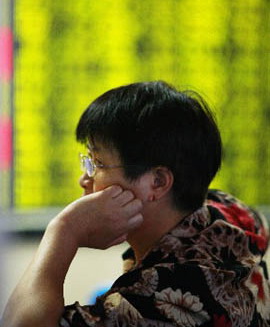
The moves are aimed at stabilizing the fragile stock market, reeling under the impact of the US financial crisis. In the US and Europe, the news of central banks across the world pumping billions of dollars into the market appeared to calm investors' nerves early yesterday. The triple whammy of Lehman Brothers going bust, Merrill Lynch being sold and AIG needing $85 billion of US government funds for survival sent the financial markets across the globe tumbling over the past few days. Chinas' top assets regulator said Thursday that it will back up and encourage its 147 State-owned enterprises (SOEs) to buy more stocks of their listed subsidiaries. Analysts, however, said more measures are needed to put the market back on the track to healthy development. The stock trading tax cut takes effect from today, which means the 0.1 percent tax will apply only to the sale of shares. The government had slashed the tax from 0.3 percent to 0.1 percent on April 24 to invigorate the market. But despite that the market continued to fall, with the benchmark Shanghai Composite Index (SCI) hitting a low of 1,802 yesterday before closing at 1,896 points, down 1.72 percent. The SCI has dropped about 70 percent from its October peak of 6,124. Central Huijin, an arm of the country's sovereign wealth fund China Investment Corp, said it has started buying shares of heavyweights such as Industrial and Commercial Bank of China (ICBC), Bank of China (BOC) and China Construction Bank (CCB) as early as yesterday. Li Rongrong, head of the State-owned Assets Supervision and Administration Commission (SASAC), said the regulatory body has for long wanted SOEs, especially the 147 that report to the central government directly, to become an active force in facilitating a stable development of the stock market. Companies owned by the 147 giants should play an exemplary role in the market. He said the national economy is basically sound, and the key SOEs are performing well. The SASAC encourages them to buy more stocks of their listed companies. Banks' shares have fallen steeply during the last two trading sessions, thanks to the news of Lehman's bankruptcy. "The government has taken the steps to protect the market from irrational sell-off," Li Zhikun, China Jianyin Investment Securities' senior analyst, said. Chinese stocks have become fairly undervalued after steep falls during the past year, and the government is trying to restore investor confidence, he said. Though the market is expected to rebound, analysts are not sure how long it would sustain. To hold the market from diving further, more measures need to be taken, they said. For example, the fear of mass floating of shares, locked up before the share-merger reform in 2005, has triggered a continuous sell-off since early this year, said Zhao Xijun, professor of finance at Renmin University of China. The authorities, on the other hand, could issue new regulations to make it more difficult for those shares to flood the market. |
山东| 澄江县| 玛曲县| 遵化市| 台南市| 博湖县| 黄平县| 辰溪县| 太康县| 依安县| 左权县| 江达县| 荆门市| 太谷县| 思茅市| 齐河县| 垣曲县| 亚东县| 万载县| 积石山| 江永县| 长治县| 博白县| 翁牛特旗| 永和县| 巴青县| 广昌县| 精河县| 高青县| 旬阳县| 金坛市| 长沙市| 沙田区| 福州市| 绥江县| 武宁县| 九寨沟县| 重庆市| 襄垣县| 株洲县| 碌曲县|