CHINA> National

|
CHINA> National
|
|
'Made in China' brand reaps Olympic dividend
(Agencies)
Updated: 2008-08-24 16:29 The Olympics had a negligible direct impact on China's economy, but analysts say the near flawless organisation of the Games was a priceless 17-day advertisement for the "Made in China" brand.
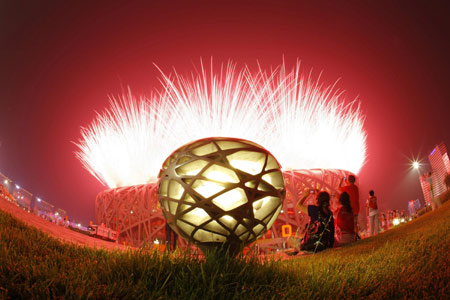
Billions of television viewers saw athletes performing in gleaming high-tech stadiums in a city rebuilt by some of the world's most renowned architects, projecting the image of a modern and cutting edge economy. For a country traditionally seen as a low-cost manufacturing hub, the Olympics was a timely re-branding exercise. "If you go back 12 months, 'brand China' was in tremendous difficulties with toxic toys and a number of other issues," said Beijing-based Greg Paull, who runs market research firm R3. "They've come a long way in a year," he said. A virtually glitch-free Games in terms of organisation could bring profound changes in the way China is seen by the rest of the world. "China's amazing haul of gold medals has mirrored its spectacular economic growth to signal to the world that China has truly arrived," said Seth Grossman, a Shanghai executive with media communications agency Carat China. "From the grandeur of the opening ceremony to the self-assured way Chinese athletes expected to win in so many events, China exceeded every expectation." Paull said many Chinese companies would be able to use the Olympic dividend to expand outside their domestic market and make their mark on the global stage. He cited the example of sportswear maker Li Ning, whose founder lit the flame at the Olympic opening ceremony on August 8 after a spectacular skywalk around the top of the "Bird's Nest" stadium. "Companies like Li Ning that are looking to expand globally are going to use the Olympics as a chance to do that," said Paull. China is the world's fourth-biggest economy, and the concrete impact on the economy was always going to be minimal. "It won't do much to lift growth as the Chinese economy is so huge," said Qiu Qingdong, an economist with Guodu Securities. Even for the city of Beijing, the economic impact of tourism and other spending has been limited. Beijing hotels have received fewer visitors than they expected, with the occupancy rates for three-star hotels and lower lingering under 40 percent, according to the Beijing Statistical Bureau. "Before the Games, people were anticipating a business boom in tourism, benefiting hotels, airlines and local restaurants," said Li Wei, an analyst with Standard Chartered. "Now it's becoming clear that the impact wasn't all that big. I don't think industries like that are likely to benefit greatly from one month of Olympics and Paralympics," he said. But to many analysts measuring the impact of the Olympic Games, it was never going to be a simple question of, say, August tourism revenue. Instead they focused on the big picture, the profound changes taking place in China and their effect on the rest of the world. "Analysing the one-off macroeconomic impact, or the 'economics of the Games', is not really an issue of such great importance," Daniel Chui, head of investor communications at JF Asset Management said. Focusing on the little figures might even distract attention from the fact that we are witnessing an epoch-defining event, he argued. "The Beijing Olympics are another milepost in China's transformation into an efficient, market-oriented and financially sophisticated economy and a more open society," he said. |
仪征市| 崇信县| 通榆县| 浦东新区| 浦城县| 牡丹江市| 石景山区| 瑞丽市| 石棉县| 郸城县| 芜湖市| 内丘县| 大邑县| 望奎县| 旬邑县| 湖口县| 泽普县| 江西省| 兰州市| 平湖市| 仁怀市| 正蓝旗| 咸丰县| 抚宁县| 英山县| 广河县| 贵溪市| 桐梓县| 固阳县| 昌乐县| 巴青县| 山西省| 崇仁县| 龙里县| 原平市| 荆州市| 册亨县| 海淀区| 萝北县| 樟树市| 海南省|