CHINA> Regional

|
CHINA> Regional
|
|
Chengdu tourist sites intact, still yield their wonders
By Huang Zhiling and Wang Wei (China Daily)
Updated: 2008-08-04 07:22 Neil Kelsall, a young tour leader from Manchester in the United Kingdom, took nearly 20 tourists from Britain to the Chengdu Research Center for Giant Panda Breeding in the northern suburbs of this capital of Sichuan province during their one-day stay in the city in late July.
Kelsall, who can write in Chinese, told China Daily that there was much coverage of the May 12 Wenchuan earthquake in Sichuan, but members of his group felt Chengdu very safe. More overseas tourists than in any other part of Chengdu visit the center, the world's only base of its kind in a metropolis. From July 26 to 27, three pandas were born at the center within 14 hours, a mini baby boom for the rare animals. It was the first time in history that a captive panda population gave birth to so many cubs in such a short period of time. With the birth of the four cubs, the center is now home to 71 pandas - the world's largest captive panda population. As Chengdu was unscathed in the devastating quake, which killed nearly 70,000 nationwide, its tourism sector picked up the pieces about a month after the quake, the epicenter of which was 92 km away in Wenchuan county.
The average occupancy rate of Chengdu's star hotels has risen to 60 percent and some had reached 80 percent, higher than before the quake, said Deng Gongli, chief of the Chengdu municipal tourism administration. Since June 14, tour groups from Guiyang, capital of Sichuan's neighboring Guizhou province, Taiwan province and the Netherlands have visited Chengdu. Deng's administration has signed contracts with numerous travel agencies in different parts of the country to bring more visitors, he said. Visitors to Chengdu say their trip to the city is quite pleasant this time of year, for fewer visitors are in Chengdu as visitor attractions are not as overcrowded as before.
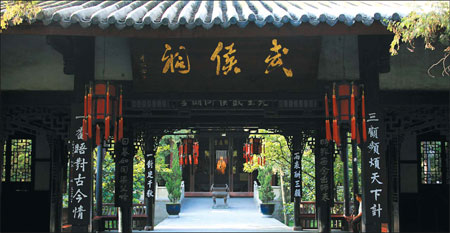
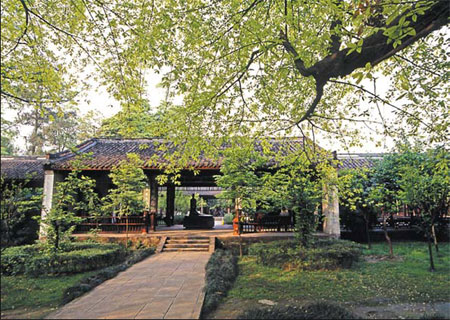
Du Fu Thatched Cottage, the Temple of Marquis Wu and Jinsha Site Museum are among the must-see sights for first-time visitors to Chengdu. A thatched cottage in the western suburbs is the former residence of Du Fu (712-770), one of the three greatest Chinese poets of ancient times. The site offers a traditional Chinese-style garden built where the poet lived. Du has enjoyed lasting fame in China and his poems are included in textbooks and are prescribed readings for any foreign student majoring in Chinese literature. Du lived in a period when one of China's most illustrious feudal dynasties was beginning a slide into decline. A war fought by two rebel generals from 755 to 763 ravaged much of the country and accelerated the dynasty's degeneration. Du, a native of Gongxian, Central China's Henan province, reached Chengdu in 759 to take refuge from the war. The following spring, he built a cottage by the Flower Bathing Brook with financial help from friends. He lived a peaceful life for about four years in the cottage, writing 240 of his existing 1,400 poems. |
四会市| 新乐市| 肃北| 抚宁县| 昭苏县| 田林县| 建阳市| 外汇| 蒲江县| 宜阳县| 普洱| 那坡县| 新巴尔虎右旗| 青田县| 镇安县| 萍乡市| 英吉沙县| 乐业县| 和林格尔县| 永登县| 霍山县| 武定县| 安图县| 沙坪坝区| 西乌珠穆沁旗| 当雄县| 赤峰市| 黄梅县| 庆阳市| 延吉市| 江油市| 赞皇县| 长泰县| 泸定县| 班玛县| 凤城市| 余干县| 巫山县| 神木县| 宝坻区| 辽阳县|