US Treasury opposes currency bill
(China Daily)Updated: 2007-07-28 08:33
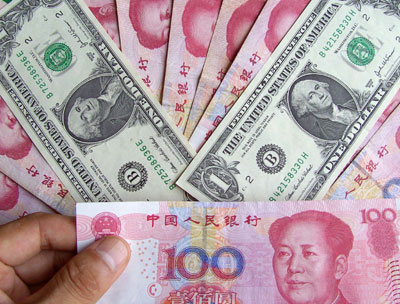 Chinese currency and US dollar banknotes are seen in this photo taken on July 10, 2007. [newsphoto] |
The US Treasury Department said it continues to believe that the robust Strategic Economic Dialogue (SED) is the best means of achieving progress, when opposing a bill aimed at pressing China to raise the value of its currency.
The Treasury said in a statement the bill represents the wrong approach in achieving essential currency and economic reforms in China that would reduce trade imbalances.
The US Senate Finance Committee voted 20-1 on Thursday to pass a bill that would give the US government new tools to pressure China to float the yuan currency in open markets.
"It distances the US from a multilateral approach and raises serious concerns regarding US compliance with international rules governing anti-dumping investigations," the statement said.
The Treasury said it recognized that members of Congress want to send a strong message to China through this bill and others under consideration, adding that Treasury Secretary Henry Paulson would tell the Chinese leadership that "it is vital to the health of the global economy, including the US economy, that China reform its currency and take other steps to reduce imbalances."
Paulson will start his fourth visit to China next week and is scheduled to hold talks with President Hu Jintao and Vice- Premier Wu Yi.
But the Treasury said it cannot support the bill's approach and "continues to believe that direct, robust discussions with the senior Chinese leaders, not legislation, is the best means of achieving progress."
The bill requires the Commerce Department to take "currency undervaluation" into account when calculating anti-dumping duties on foreign goods, which could lead to higher duties already in place on many Chinese products, and encourage US companies to seek new duties on additional Chinese goods.
The bill also would require the Bush administration to take action through the International Monetary Fund and eventually the World Trade Organization against targeted countries that refuse to reform their currency policies.
The overwhelming vote shows Congress is headed toward passing legislation by a big enough margin to overcome any presidential veto, said Senator Charles Schumer, a New York Democrat who helped craft the measure.
A faster appreciation of the yuan is not a panacea to the broadening US-Chinese trade deficit or other ills, such as losses in manufacturing jobs, Federal Reserve Chairman Ben S. Bernanke said last week.
Vice-Premier Wu told a dinner in Washington in May attended by Paulson and Bernanke that the yuan's value was not the cause of the deficit.
She added that about 85 per cent of China's surplus with the US is from foreign companies exporting products no longer made in the United States, such as shoes.
Meanwhile, China has made it clear on many occasions that the country would carry out the exchange rate reform in an independent, controllable and gradual way to maintain the yuan's strength.
The yuan has seen seesawing fluctuations versus the dollar since 2005.
China promised to deepen the exchange rate reform to allow the yuan to fluctuate in line with market supply and demand during the second strategic economic dialogue between the two countries.
|
||
|
||
|
|