| Home |
| News |
| Celebration |
| HK Today |
| HK in Retrospect |
| Video |
| Photo |
|
chinadaily.com.cn | ||||||||
|
|||||||||
|
HK 10 Years > Newsmaker |
|
Deng set deadline for talks on return
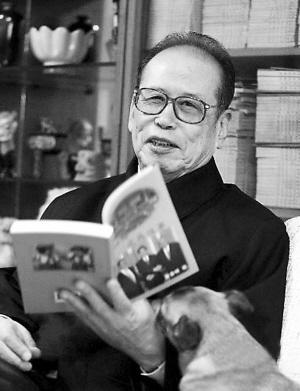
Zhou, who was the country's chief negotiator at the time, was recalling the role of Deng and the key decisions made during the often tense talks. Deng said that while China hoped to resolve the issue in a peaceful way, he had set a deadline of two years.
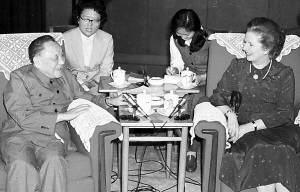
"We hoped there would be no disruptions during the transition. If Hong Kong experienced upheavals, we would be forced to reconsider the deadline and methods. That is to say, we would not wait until 1997, and the issue would be solved by non-peaceful means," Zhou remembered Deng saying. Zhou, who witnessed the entire process of the territory's return, spoke about Deng's role in the Sino-British negotiations in an interview with Xinhua, ahead of the 10th anniversary of Hong Kong's return on July 1. "During the negotiations, one of the events which left the deepest impression was Deng's first meeting with then British Prime Minister Margaret Thatcher in Beijing in September 1982," said Zhou, a vice-foreign minister in the 1980s and director of the Hong Kong branch of the Xinhua News Agency from 1990 to 1997. "The excellent remarks by Deng during the meeting set the keynote of the Chinese standpoint on resolving the Hong Kong issue," Zhou said. "It was a tit-for-tat meeting," he said. The British side intended to nominally hand over the sovereignty of Hong Kong to China, but retain the administrative rights. But Deng said there was no room for negotiation on the issue of sovereignty, Zhou said. "We had waited for so long, and the people trusted the government to do the right thing. If Hong Kong could not be returned to China in 1997, we would be seen as traitors and we should step down automatically," Zhou quoted Deng as saying. Deng strongly opposed the establishment of a British high commission in Hong Kong. He got angry when the British opposed China's deployment of troops in Hong Kong, Zhou said. When the Sino-British negotiations focused on the arrangements before 1997, Deng emphasized that the British should not abuse Hong Kong revenues, undermine the currency or encourage the withdrawal of capital, and leave a huge financial deficit for the government of the Hong Kong Special Administrative Region (SAR), Zhou said. Under Deng's instructions, the Chinese side stuck to its principles while remaining flexible, and overcame many obstacles, reaching an agreement with Britain in September 1984, just before the deadline, Zhou said. During the composition of the Basic Law, one of the key issues was to determine the political system of the future Hong Kong SAR. Deng said Hong Kong should not copy Western systems and universal suffrage must be implemented gradually rather than in a single move. "Deng's instructions are still relevant today. They are practical guide with far-reaching implications," Zhou said. Born in 1927, Zhou was the head of the Chinese delegation during the negotiations from January to September 1984. He was appointed vice-foreign minister and signed the draft of the Sino-British Joint Declaration on behalf of the Chinese delegation in the same month. Zhou said he has cared about the development of Hong Kong ever since. "The experience of the past 10 years since Hong Kong's return has shown that the principle of one country, two systems is feasible," he said. Xinhua
|
|
|||||||
Copyright 1995-2007. All rights reserved. |
海淀区| 兰西县| 休宁县| 南宫市| 沧源| 永仁县| 浠水县| 新巴尔虎左旗| 漯河市| 通辽市| 吴忠市| 新蔡县| 平山县| 荥经县| 万安县| 玛多县| 砀山县| 渭南市| 宁波市| 双流县| 开原市| 连平县| 贡山| 射阳县| 班戈县| 清水河县| 双柏县| 和顺县| 昌乐县| 红原县| 琼中| 江都市| 江油市| 页游| 连云港市| 梅州市| 绥阳县| 屏边| 涿鹿县| 嘉善县| 南昌市|