CHINA> About the Shanghai Expo

|
CHINA> About the Shanghai Expo
|
|
Theme and Emblem
(expo2010china.com)
Updated: 2007-04-11 16:03 Theme - Better City, Better Life
The city is a crystallisation of human civilisation. Just as the American social philosopher Lewis Mumford put it,"the city is a special structure which, fine and compact, has been designed to preserve the fruits of human civilisation."Many Western languages have derived their versions of the term "civilisation" from the same Latin word"civitas"(meaning "city"), and it is by no means a coincidence. By virtue of its embracing and regenerating nature, the city has played a significant role in the perfection of order in human society.
In 1800, only 2 percent of the global population lived in cities, but by 1950, the figure had risen to 29 percent, and by 2000, almost half the world population had moved into cities. The United Nations estimates the urban population will account for 55 percent of the total human population by 2010. Despite all its glories, there is no denying that the city today, because of high-density living patterns, faces a series of challenges, such as spatial conflicts, cultural collisions, resource shortages and environment degeneration. Without effective controls, the unchecked expansion of cities will aggravate these problems and consequently erode the quality of urban life. As the Istanbul Declaration on Human Settlements, issued at the United Nations Conference on Human Settlements (Habitat II) reaffirms,"Our cities must be places where human beings lead fulfilling lives in dignity, good health, safety, happiness and hope." All the problems facing the city, including congestion, pollution, crime and conflict, are believed to have originated from the discords between man and nature, between man and man, and between spiritual and material aspects of life. It is also maintained that such discord, if left unattended, will inevitably lead to the decline of the quality of life in cities and even the degeneration of human civilisation. It is in the face of such discord that Expo 2010 Shanghai China proposes the concept of a "City of Harmony" responding to the appeal for "Better City, Better Life." Harmony was a core proposition of ancient Chinese philosophy, which advocated harmony between people, between man and heaven, and between body and soul. It is also the ideal of some ancient Western philosophers. Over past centuries, human beings have never stopped their search for models of harmonious cities. A series of theories, propositions and models, from More's Utopia to Ledoux's Ideal City to Howard's Garden City, all strive for balance and harmony in terms of space, order, and spiritual and material input and output. Since the 1980s, the concept of sustainable development has risen as a fundamental solution to environmental and development issues. Governments around the world, in their local versions of Agenda 21 (a Chinese Government programme designed to ensure sustainable development in the 21st century), have formulated development strategies that more or less centre on the proposition of "harmony," especially that between the current and future generations. It can be clearly seen that the quest for the "City of Harmony" as run through the urban history of mankind, and has increasingly become a highlight in the blueprint of future cities. The "City of Harmony" features harmonious co-existence of diverse cultures, harmonious economic development, harmonious living. The city is a crystallisation of human civilisation. Just as the American social philosopher Lewis Mumford put it,??the city is a special structure which, fine and compact, has been designed to preserve the fruits of human civilisation.??Many Western languages have derived their versions of the term??civilisation??from the same Latin word??civitas??(meaning??city??), and it is by no means a coincidence. By virtue of its embracing and regenerating nature, the city has played a significant role in the perfection of order in human society.
As the Istanbul Declaration on Human Settlements, issued at the United Nations Conference on Human Settlements (Habitat II) reaffirms,??Our cities must be places where human beings lead fulfilling lives in dignity, good health, safety, happiness and hope.??All the problems facing the city, including congestion, pollution, crime and conflict, are believed to have originated from the discords between man and nature, between man and man, and between spiritual and material aspects of life. It is also maintained that such discord, if left unattended, will inevitably lead to the decline of the quality of life in cities and even the degeneration of human civilisation. It is in the face of such discord that Expo 2010 Shanghai China proposes the concept of a "City of Harmony" responding to the appeal for "Better City, Better Life." Harmony was a core proposition of ancient Chinese philosophy, which advocated harmony between people, between man and heaven, and between body and soul. It is also the ideal of some ancient Western philosophers. Over past centuries, human beings have never stopped their search for models of harmonious cities. A series of theories, propositions and models, from More's Utopia to Ledoux's Ideal City to Howard's Garden City, all strive for balance and harmony in terms of space, order, and spiritual and material input and output. Since the 1980s, the concept of sustainable development has risen as a fundamental solution to environmental and development issues. Governments around the world, in their local versions of Agenda 21 (a Chinese Government programme designed to ensure sustainable development in the 21st century), have formulated development strategies that more or less centre on the proposition of??harmony,??especially that between the current and future generations. It can be clearly seen that the quest for the??City of Harmony??has run through the urban history of mankind, and has increasingly become a highlight in the blueprint of future cities. The??City of Harmony??features harmonious co-existence of diverse cultures, harmonious economic development, harmonious living in the age of science and technology, harmonious functioning of communities, the cells of the city, and harmonious interactions between urban and rural areas. in the age of science and technology, harmonious functioning of communities, the cells of the city, and harmonious interactions between urban and rural areas. Emblem |
孝感市| 玛纳斯县| 若羌县| 酉阳| 皮山县| 师宗县| 中方县| 义乌市| 安新县| 凯里市| 绩溪县| 西藏| 九龙坡区| 彭泽县| 城固县| 沈丘县| 娄烦县| 金阳县| 仪征市| 绥阳县| 大城县| 韶山市| 丰原市| 温州市| 上思县| 娱乐| 云和县| 弥勒县| 黑龙江省| 娄底市| 佛坪县| 元江| 克东县| 黄冈市| 武山县| 杭州市| 安化县| 石棉县| 科技| 交口县| 启东市|


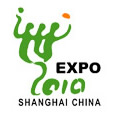 The emblem, depicting the image of three people-you, me, him/her holding hands together, symbolizes the big family of mankind. Inspired by the shape of the Chinese character
 (meaning the world), the design conveys the organizer's wish to host an Expo which is of global scale and which showcases the diversified urban cultures of the world.