Outer space experiments by China's Shenzhou IV craft will significantly benefit the nation's oceanic observation and meteorological forecasts, scientists said on April 16.
The prediction was based on the latest information to emerge from the country's fourth unmanned spaceship, and probably the last before China launches a manned craft later this year.
Scientists disclosed that the orbital module of Shenzhou IV has functioned normally for 100 days, following the re-entry module's return to earth on January 5.
It is the first time that China has put a multiple-mode microwave remote sensor into space -- aboard Shenzhou IV's orbital module, said Gu Yidong, chief design engineer of China's space application system.
The sensor is sending an array of "valuable data" on precipitation, wind speed and direction, as well as the color and temperature of the ocean's surface, said Liu Junze, on the team of the Beijing Aerospace Command and Control Center.
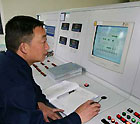
Liu's center, which monitors the orbital module operation, is the nerve hub of China's space program. It directed the launches and recovery of four unmanned space capsules between November 1999 and January 2003.
"The information gathered so far indicates China has made a breakthrough in key technologies in microwave remote sensing," said Gu.
China will send two oceanic and meteorological satellites into space in 2005 in its run-up to building a sophisticated earth observation system, officials announced earlier.
Gu and Liu said they believed the experiments from the orbital module will ultimately facilitate China's efforts to develop oceans, monitor pollution, help mitigate natural disasters, and provide more accurate weather forecasts.
Tang Wenjun, another member of the Beijing Aerospace Command and Control Center, said they had issued more than 1,000 tele-commands to steer the flight and operate the orbital module. The module will remain in space for another several months, he said.
The Shenzhou IV was sent into space on December 30 last year.