Comments
  Print
Print  Mail
Mail  Large Medium Small
Pharmaceutical company Lilly China will double its staff to 2,000 this year even as experts debate whether the economy has bottomed out.
"A large portion of the hires are in sales and distribution as we expect to do a better job reaching patients in central and western areas of China," David Ricks, Lilly China president, told China Business Weekly late last month.
But he added Lilly China is growing in all aspects, so new employees will be needed in virtually every function from manufacturing and R&D to accounting and operations.
Lilly China is not the only pharmaceutical firm expanding recruitment in China even as global workforce numbers are stagnant or even dropping.
Swiss drug maker Novartis Pharmaceuticals expects to increase its 2,700 employees in China by 20 percent each year until at least 2013. The bulk of the new positions will be in sales, according to CEO Joseph Jimenez.
Amy Huang, vice-president and China director of GlaxoSmithKline (GSK), said the company does not intend to cut its budget for China this year - instead it will invest more in developing new medicines and vaccines, including funds for expansion of human resources related to R&D. The UK-headquartered company announced in February it will cut 6,000 jobs this year globally.

The world's second-largest generic medicine company Sandoz said it will recruit more people in China, not only in sales and manufacturing, but also managerial talent.
"The reason for the workforce enhancement in China is rapid expansion of these drug companies here," said Peng Haizhu, pharmaceutical analyst of Huatai Securities.
Year-on-year sales of Lilly China grew around 30 percent in 2008, while its global business rose 9 percent. GSK achieved a 12 percent growth in sales in emerging markets.
China outperformed other emerging markets with a 22 percent increase in sales as global numbers fell by 3 percent. Sales by Novartis Pharmaceuticals in China jumped 29 percent year-on-year to 3.3 billion yuan in 2008, compared with its 6 percent global growth and the company is expecting a 30 percent rise in China this year. AstraZeneca's figures were 25 percent and 7 percent in China and the world respectively.
Best performers
"In any global company, different regional operations are competing with each other for limited resources, so the best performers will get more support from headquarters," said Wu Changqi, associate dean of Peking University's Guanghua School of Management. "So, it's understandable that the promising China branch can add workforce while other regions cut jobs."
As well, surging demand in China stimulated pharmaceuticals to build new facilities that create job opportunities for locals.
It is estimated that more than 200 million households in China will earn over 40,000 yuan a year by 2025, with spending on private healthcare and medicines by urban consumers expected to record double digit growth every year in the coming two decades, according to a report of PricewaterhouseCoopers, an industry assurance, tax and advisory services provider.
Eli Lilly, eyeing the market potential, has pledged to inject $100 million in China for R&D from 2008 to 2012. In February, Pfizer set up a $60 million manufacturing facility in northeast China's Dalian city, while Bayer announced plans to invest up to 100 million euros over the next five years for an R&D center in Beijing.
Peng pointed out that China's three-year 850 billion yuan medical system reform package that aims to provide more accessible and affordable healthcare to the country's 1.3 billion people provides new opportunities in smaller cities and rural areas, which in turn drives pharmaceuticals to recruit more employees to reach those regions.
Executives of foreign drug behemoths all admit that a large part of new recruits will be sales people who will be in charge of setting up distribution networks in China's western and central areas and in county-level hospitals.
"Qualified people specialized in this kind of work are not easy to get," said Peng, explaining that they should have pharmaceutical background, be familiar with medical systems and local cultures in underdeveloped areas - very different than in large cities - as well as have hard-working and easy-going personalities.
Ricks said campus recruitment is key to finding new employees who have a professional medical background. People who leave other sectors and turn to the pharmaceutical industry are also welcomed. Executive headhunting is used for managerial positions.
Peng of Huatai said finding and retaining talent is a real challenge for pharmaceutical companies because the number with medical backgrounds cannot keep pace with the surge of demand, resulting in ever-increasing competition among various companies.
Lilly China's Ricks estimated that turnover is as high as 35 to 50 percent in local drug firms and 20 to 30 percent in multinational companies. In Lilly China, the figure is 5 to 10 percent.
"In finding and retaining good and skilled people our strategy is to build from within," he said.
Peng attributed the relatively lower turnover to bigger salaries at multinationals.
"Multinationals are particularly attractive to R&D talent as their research facilities are usually world class and international communication is much more convenient and up to date."
Wu of Peking University said companies that make efforts to recruit new talent and provide a professional, ethical corporate culture are smart.
"They are accumulating high-level human resources and preparing for the coming recovery," he said, predicting that the emerging markets, including China, will still develop faster than developed economies when rising from the economic slowdown.
"Talent will be the most needed resource in the recovery - it is hard to cultivate in a short time," he added.
(China Daily 06/15/2009 page7)

 Night views of Harbin through the lens
 Tibetans take train home after pilgrimage or travelling
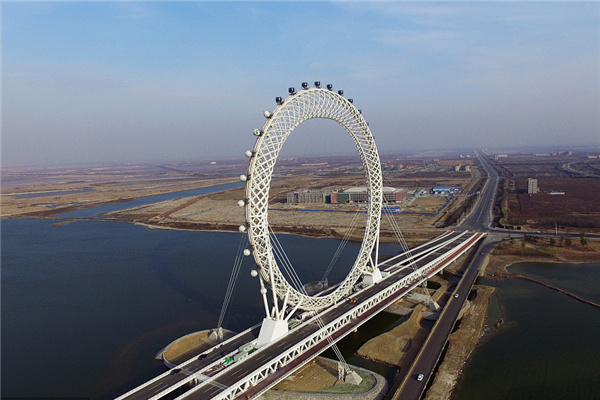 World's largest shaftless Ferris wheel built in China
 Ancient cities to be connected by Xi'an-Chengdu high-speed railway
 Snow turns Harbin into winter wonderland
 Reed Catkin Festival held in Wuhan
 Is it a building or a bookshelf?
 First flight
 Polar icebreaker Snow Dragon arrives in Antarctic
 Xi's vision on shared future for humanity
 UN's top environmental honors go to three in China
 German trains collide near Duesseldorf, several people injured
 China beats Germany 7-4 in men's curling Olympic qualification
 Bayern beat Paris Saint-Germain 3-1 in UEFA Champions League


Copyright 1995 - . All rights reserved. The content (including but not limited to text, photo, multimedia information, etc) published in this site belongs to China Daily Information Co (CDIC). Without written authorization from CDIC, such content shall not be republished or used in any form. Note: Browsers with 1024*768 or higher resolution are suggested for this site.
License for publishing multimedia online 0108263 Registration Number: 20100000002731