Comments
  Print
Print  Mail
Mail  Large Medium Small
The newly reached consensus between the US Senate and House of Representatives on the final version of the economic stimulus bill includes a "Buy American" clause, which gives preference to domestic steel companies and other US manufacturers. But the existing industrial manufacturing capacity of the US might not be able to replace exports from trade partners. The Obama administration has to give weight to the role of China, which has the largest holding of US treasury bonds, in supporting the US economic recovery.
The two countries have differences in trade issues but they are also engaged in close cooperation in a variety of sectors. Will the Obama administration resort to protectionism in a time of crisis? Experts give different opinions on Caijing magazine's website.
Yes
Zhou Shijian, researcher at Tsinghua University:
The prospects of Sino-US trade relations against the backdrop of the global financial crisis are not good. Both economies are in a downside spiral. The biggest contributor to the drop in China's GDP is its weakening exports. The Chinese government is pulling out all stops to stabilize exports while the US, a major destination for Chinese exports, is trying to expand its exports while reducing imports from China, creating a conflict of interest between the two.
Barack Obama, who belongs to the Democratic Party, will likely adopt protectionist rules to help workers and unions. In a letter to textile workers in North Carolina during his election campaign Obama said protecting workers' interests is at the core of his policies.
China's exports of textile products account for more than 30 percent of the US market and his policies on Chinese exports to the US would likely be aggressive. China also exports a lot of steel to the US.
Philip Levy, scholar, American Enterprise Institute:
Obama may tilt heavily toward protectionism.
He said America must foster better relations with other countries, adopt multilateralism and listen to opinions of others instead of telling others what they should do. But in the trade sector, he is telling others what they should do. He has told Canada and Mexico what they should do in relation to the North American Free Trade Agreement, he has told South Korea what it should do if it wants to reach a free trade agreement with the US. What he has demonstrated in the area of trade has nothing to do with multilateralism.
In some of the bills Obama supported when he was a senator, he chose China as a target. During the presidential election campaign many domestic organizations targeting China won pledges from Obama.
No
Xu Sitao, chief China representative, the Economist Group:
The Sino-US relations are mutually complementary. Obama has said he will change America but he also admitted that the upcoming term would be a challenging process for his administration. In this circumstance he may not pursue a policy that is politically correct but economically unacceptable.
George W. Bush is not popular in some countries but the world has recognized that he was clear in upholding the banner of free trade, which is the mainstream of US society. Obama will not give up some of the successful practices of his predecessor. Even if Obama wanted to carry out a protectionist policy, he would have trouble doing so. He would not find it feasible to increase tariff on Chinese products, impose more trade barriers or resort to anti-dumping measures to block Chinese products. A possible scenario would be the US repeating its verbal threat to pressure China to appreciate the yuan but not translating words into substantial actions.
Gary Hufbauer, senior fellow, the Peterson Institute for International Economics:
Obama will not ignore sound trade relations with other countries since he wants to pursue a good foreign relations policy. It would not be in the interest of the US people. Trade protectionism is popular among some US legislators but such sentiment, though widespread, is not deep-rooted.
China will be a target of protectionist rhetoric, but it is not the only one. The final version of the "buy American" product clause in the US economic stimulus bill will have a bearing on imports from Europe, Asia, Australia and New Zealand as well. The bill will not lead to a trade war with China. The Obama administration would not go that far. Obama will be cautious in this respect.
(China Daily 02/23/2009 page2)

 Night views of Harbin through the lens
 Tibetans take train home after pilgrimage or travelling
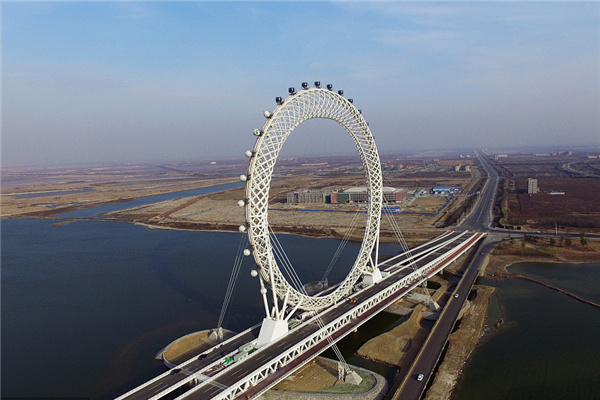 World's largest shaftless Ferris wheel built in China
 Ancient cities to be connected by Xi'an-Chengdu high-speed railway
 Snow turns Harbin into winter wonderland
 Reed Catkin Festival held in Wuhan
 Is it a building or a bookshelf?
 First flight
 Polar icebreaker Snow Dragon arrives in Antarctic
 Xi's vision on shared future for humanity
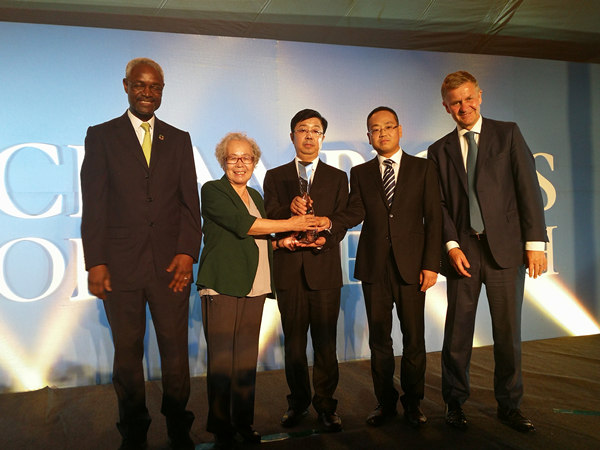 UN's top environmental honors go to three in China
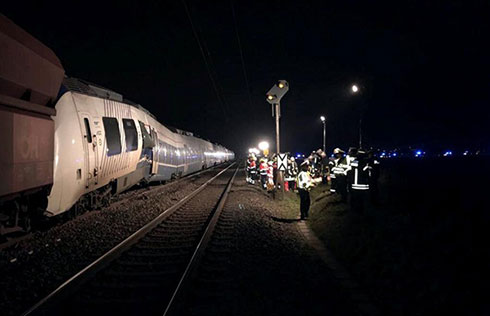 German trains collide near Duesseldorf, several people injured
 China beats Germany 7-4 in men's curling Olympic qualification
 Bayern beat Paris Saint-Germain 3-1 in UEFA Champions League


Copyright 1995 - . All rights reserved. The content (including but not limited to text, photo, multimedia information, etc) published in this site belongs to China Daily Information Co (CDIC). Without written authorization from CDIC, such content shall not be republished or used in any form. Note: Browsers with 1024*768 or higher resolution are suggested for this site.
License for publishing multimedia online 0108263 Registration Number: 20100000002731