Xiaomi unveils first in-house chipset
 |
|
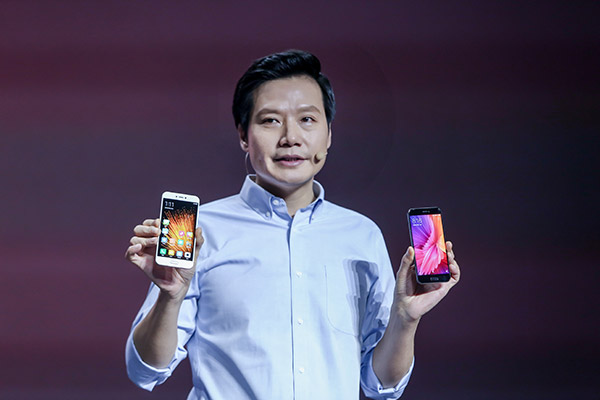
Xiaomi CEO Lei Jun shows the company's Mi 5C on Tuesday in Beijing. [Photo provided to China Daily] |
Xiaomi Corp unveiled its first in-house chipset on Tuesday, making it the second Chinese smartphone vendor, after Huawei Technologies Co Ltd, to master the core chip designing technology.
It is also part of China's broad efforts to reduce its reliance on foreign technology, given that Xiaomi's expansion into the chip sector was partly funded by the Chinese government.
Surge S1, the new chip, combines four powerful and four efficient cores which can help strike a balance of performance and power efficiency, the company said.
At the product launch in Beijing, Xiaomi also unveiled its first Sure S1-powered smartphone Mi 5C. The 1,499-yuan ($218) handset enables Xiaomi to join the ranks of Samsung Electronics Corp, Apple Inc and Huawei, which can apply in-house chips to their handsets.
Lei Jun, CEO of Xiaomi, said it took 28 months for the company to turn the idea of making an in-house chip into a reality.
"Chip technology is the crown in the smartphone sector but it is highly cash-intensive. If we want to challenge the world's top three players, we need to devote long-time efforts into the research and development of chips," Lei said, expressing thanks for the financial support from the Beijing municipal government.
China has been spending big on cultivating homegrown chip makers amid concerns over national security and reducing the nation's reliance on foreign technology. In 2014, China spent more than $200 billion on importing chipsets-more than it spent on oil imports in the same period, official data show.
Roger Sheng, research director at Gartner Inc, said it is not an easy job for Xiaomi to successfully develop a chip at its first attempt.
"But it is still at the entry level. There is no significant advantage regarding its in-house chip compared with rival products," Sheng said.
"In fact, the chip makes more sense in the marketing side, which can help build Xiaomi as an innovative brand."
The move also came as Xiaomi is struggling with sluggish smartphone sales. It dropped out of the top five smartphone vendors in China last year, amid the intensified competition with Huawei, Oppo and Vivo.
Huawei started to use self-developed Kirin chips in some of its smartphones several years ago.