Editor's note: This year's economic expansion is widely expected to be the slowest in many years, and the central leadership envisions a "new normal" for the pace GDP growth and its structure going forward. What will unfold in 2015 - sustained, rapid expansion or an orderly transition to slower growth? China Daily asked a group of economists and analysts on their expectations for the economy in 2015.
|
 |
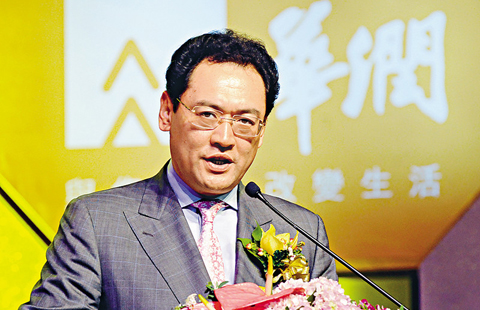
| KUANG XIANMING, DIRECTOR OF THE ECONOMIC RESEARCH CENTER AT THE CHINA INSTITUTE FOR REFORM AND DEVELOPMENT? |
What is the most likely outcome for China's economy next year-sustained, rapid expansion or an orderly transition to slower growth?
The hope is an orderly transition. The outside world is very clear that China has huge growth potential and lots of growth points. The key is whether these forces can be unleashed. A major reason for the enormous down ward pressure China faces is the relatively slow shift away from its traditional investment-driven growth model. Economic restructuring needs to go faster. Once the economy and investment become consumption-driven, there is no doubt that China can achieve 10 years of 7 percent growth.
What is the most important indicator that observers should use when judging whether a transition has taken place? How can China achieve the goal implied by that indicator?
The most important indicator is the emergence of an economy dominated by consumption. Specifically, that implies a situation where the consumption rate (the ratio of government and household consumption to GDP) reaches 55 percent, the household consumption rate exceeds 40 percent and the consumption rate exceeds the investment rate.
To realize these goals, several changes are needed. The service industry (the producer service industry included) must surpass 55 percent of GDP by 2020. The structure of investment must also change, with investment in the service industry rising while investment in manufacturing falling.
There must also be a change in the distribution of income, so that the middle class accounts for 40 percent of the population by 2020. And the nation must speed up urbanization so that the real urbanization rate would rise from 36 percent at present to 50 percent by 2020.
What is the biggest concern for the Chinese economy in 2015? How can China address that concern?
In the short term, the largest danger is a lack of progress in reform. Short-term economic risks can easily be averted, but the really difficult thing is the implementation of market-oriented reform. Can there be substantial progress in reforming State-owned enterprises? In the financial sector, can private banks expand? And in the area of administrative reforms, can red tape be cut?
What is the most resilient part of China's economy? How can China best utilize its strengths in this area?
There are several potential areas of economic resilience. One is the upgrading of consumption and the emergence of personalized consumption. Others lie in eliminating the huge disparities among regions and between urban and rural areas. Ending these income gaps would mean new sources of growth. However, none of these theoretical areas of "resilience" automatically translate into real benefits. Without breakthroughs in reform, these potential strengths will not be realized.

Copyright 1995 - . All rights reserved. The content (including but not limited to text, photo, multimedia information, etc) published in this site belongs to China Daily Information Co (CDIC). Without written authorization from CDIC, such content shall not be republished or used in any form. Note: Browsers with 1024*768 or higher resolution are suggested for this site.
License for publishing multimedia online 0108263 Registration Number: 20100000002731