The main focus of these latter markets will be affordable cars. But the fast-growing sophistication of consumers in even the most remote regions – able to access exactly the same information and exposed to the same influences thanks to the internet and especially the mobile internet – means taste and demand patterns are rapidly converging with those of the eastern seaboard.
As a result, regions once seen as primarily the preserve of domestic car makers, producing entry-level models, are increasingly being contested by the big global firms looking to leverage the experience acquired in their first years in China to the new emerging markets of the hinterland.
|
 |
 |
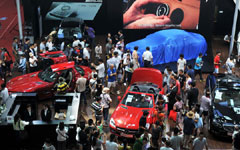
Even the government's anti-corruption efforts are failing to dampen sales in the luxury segment. Last year, BMW saw its sales rise by 20 percent, as did Porsche, while volume leader Audi saw its sales jump 21 percent to 492,000 units. Similar rises can be expected this year, although super-luxury may face some headwinds.
The continuing success of the global car makers, able to apply the strengths of their global supply chains through their joint ventures in China, makes it hard for domestic firms to compete. It looks likely that while their volumes may continue to rise in China their market share will fall. It is noteworthy that China's leading domestic auto company, Great Wall Motor, saw total sales rise 21 percent in 2013 to 754,000 units, almost solely due to a 48 percent rise in demand for its SUVs – to 417,000 units – rather than its sedans, whose volume fell.
Demand for electric vehicle shows no sign of rising to significant levels, even with central government subsidies being offered of up to 60,000 yuan per car. Total sales of plug-in cars were fewer than 15,000 units last year, with Shenzhen's BYD, once seen as the great electric vehicle hope, selling just 1,544 EVs – less than half a percent of its total passenger car sales.
Projects such as Kandi Technologies' plan to make 100,000 electric cars available to residents of Hangzhou on hourly rentals in the next two years – assuming their success – may help. But even so, hopes of meeting the government's goal of annual sales of 500,000 such vehicles by 2015 (and five million by 2020) now look unachievable.
 |
 |
| Top 10 most valuable auto brands | Top 10 moves by carmakers in China |

Copyright 1995 - . All rights reserved. The content (including but not limited to text, photo, multimedia information, etc) published in this site belongs to China Daily Information Co (CDIC). Without written authorization from CDIC, such content shall not be republished or used in any form. Note: Browsers with 1024*768 or higher resolution are suggested for this site.
License for publishing multimedia online 0108263 Registration Number: 20100000002731