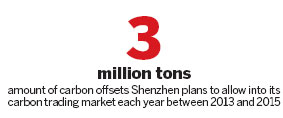
By 2015, the city will cut carbon dioxide emissions per unit of GDP to 21 percent below the 2010 level, according to its low-carbon growth plan. However, because it's extremely difficult and expensive to reduce transport and residential emissions, the municipal government set a reduction target of 25 percent for industrial enterprises.
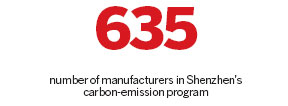
To that end, the government has allocated the 635 businesses more than 100 million tons of free carbon credits over the next three years, based on their previous emissions and industry value added. Companies that exceed their emissions quotas will be fined at a rate three times the average market price of the excess emissions.
|
|
Before they signed their quota agreements with the government, each participating company took part in the allocation process by assessing the potential for further reducing its carbon intensity and estimating its annual growth of industry value added in the period 2013 to 2015.
If a company has failed to cut carbon dioxide emissions per unit of GDP at the agreed rate a year after they signed their quota agreements, and its industry value added does not increase as quickly as estimated, the government will take back a proportion of its carbon credits accordingly.
Striking a balance
The use of adjustable carbon credits means Shenzhen will be able to balance allowance supply and demand and stabilize carbon prices, a lesson learned from the European Union's carbon-trading market.
In recent years, the price of EU carbon credits has fallen from more than 30 euros ($40) per ton to 5 euros. The price of carbon offsets, also known as certified emission reductions, slumped from more than 20 euros to around 50 euro cents.
The price decline has been caused, in part, by a recession in Europe, which led to a decrease in industrial output and, in turn, resulted in fewer emissions and an overabundance of allowances. Moreover, the EU allocated all its carbon credits simultaneously, thus making it impossible to reduce credits when the eurozone economy began to weaken.
Shenzhen can avoid similar problems by the adoption of adjustable credit allocation, said Xiao Ming, chairman of GDR Carbon, a consultancy specializing in carbon-asset management and investment.
Unlike in the EU, carbon trading is a new phenomenon for most Chinese companies, which regard carbon credits as a huge responsibility, one they have to adhere to by remaining within their emissions limits.
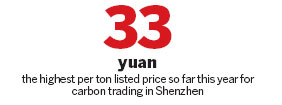
Since that first transaction at the China Emissions Exchange on June 18, a number of individual investors have opened accounts and expressed strong interest in buying emission allowances. The highest price listed is 33 yuan per ton, but so far no company has offered to sell its credits.
"Many companies have no idea of how much carbon dioxide they have emitted in the first half of 2013 and therefore dare not sell their emission allowances. Even if some of them have realized that carbon credits are corporate assets which can even be used as pledges for bank loans, they do not have a clear procedure for making investment decisions on carbon trading, nor do they have any information about the trend of domestic carbon prices because of a lack of long-term market research and analysis," said Ge Xing'an, vice-president of the China Emissions Exchange.
The companies are in no hurry to make decisions about when to buy or sell their carbon credits, the number of credits they should sell or the prices they should ask. They won't make those decisions until the first year of their contracts ends in June 2014, he added.
However, with limited emission allowances, the companies have already felt pressure to cut emissions and need to take advice from low-carbon consulting services, according to Xiao.


Copyright 1995 - . All rights reserved. The content (including but not limited to text, photo, multimedia information, etc) published in this site belongs to China Daily Information Co (CDIC). Without written authorization from CDIC, such content shall not be republished or used in any form. Note: Browsers with 1024*768 or higher resolution are suggested for this site.
License for publishing multimedia online 0108263 Registration Number: 130349