
Smart ways to become green
By Yuhan Zhang (China Daily)
2011-01-26 15:14
 |
Creating a sustainable low-carbon society will be the focus of China's economic policy during the next five years
China has been labeled the largest energy consumer, the biggest greenhouse gas emitter, and one of the world's most polluted countries for so long, it is perhaps very difficult for the public to imagine that such a "dirty" giant can become "clean". However, the country's top-level decision-makers are planning to usher in a "green revolution" that will not only transform China's image, but also the way people live.
In view of the dwindling supplies of fossil fuels and significant socioeconomic problems triggered by increasing greenhouse gas emissions, the central government has realized that the way China's economy operates threatens national energy security and the country's survival. Developing a green economy is a must.
The central government is working hard during closed-door discussions to finalize the 12th Five-Year Plan (2011-2015), which will be released in March 2011. Embarking on a green development path, with low natural resources use, low energy consumption, and low carbon emissions will ensure a sustainable future.
It is expected that in the final approved plan there will be a handful of key points outlining how China will achieve its ambitious targets.
First, China is planning to use green indices as a yardstick to evaluate the performance of local officials. Water consumption per unit of GDP, the proportion of clean coal consumption, and the proportion of GDP invested in environmental protection will be integrated into these green indices.
GDP growth will no longer be the government focus. Local governments will have to become more resource efficient and environmentally friendly in key sectors, such as heavy industry, construction, and transportation.
Second, China aims to gradually establish its carbon trading system to help it meet its 2020 carbon intensity target of reducing CO2 emissions, as a proportion of each unit of GDP produced, by 40-45 percent of 2005 levels.
Chinese policymakers regard carbon trading as a market-oriented, cost-effective supplement to current administrative measures to reduce emissions and change the country's "brown" economy to a "green" one. A cap-and-trade market is expected to be functioning by 2013 to 2015. In the next couple of years, carbon trading programs will likely focus on pilot projects in economic zones and/or industrial sectors such as the coal-fire power generation sector.
Third, China will continue to support the research, development, and deployment of clean energy technologies. China is considering massive investments of up to $1.5 trillion in seven strategic industries, including renewable energy and clean energy vehicles, which will play a more proactive role in producing state-of-the-art clean energy technologies and creating more "green collar" jobs domestically and overseas. With robust government support and private sector innovation, China's pledge to have 15 percent of its energy from non-fossil fuels by 2020 can be achieved smoothly and quickly.


Fourth, with total power capacity set to reach more than 1,430 gigawatts (GW) by 2015 up from 874 GW at the beginning of 2010, China has tried to figure out how to bring trillions of kilowatts of power to more than a billion customers, sometimes over very long distances.
The central government is planning to invest approximately $300 billion in a smart grid between 2011 and 2015. Some local governments like Jiangsu provincial government in East China and the Shanghai municipal government have taken the lead in publishing plans for smart grid development. As such, solar flywheel storage technology and electric automobile investment will rise in China.
Last but not least, for the first time China will implement marine ecological restoration. China will not only focus on supervising chemical oxygen demand, which measures the amount of organic pollutants found in surface water, but also, list the limitation of emissions of nitrogen and phosphorus, which cause eutrophication. In addition, construction that affects the coastline will be strictly monitored to ensure they are not adversely impacting the environment.
Going green will increase the likelihood of China's sustaining its strong growth of the past decade. China's upcoming national plan and policy measures will be both laudable and spectacular.
The author is a visiting research fellow with the Carnegie Endowment for International Peace.
Charger captures power from Wifi
A US electronics company invented a charger that draws its power from Wifi signals, according to TGDaily.com.
'Green seeds' chewing gum bottle
The "Green Seeds" chewing gum bottle designed by Jiang Gonglue makes it easier for you to deal with gum residue.
Bulb water heater
A French graduate designed a kettle using an incandescent bulb to heat water, according to dezeen.com
China International Green Industry Expo 2010
The China International Green Industry Expo 2010 (CIGIE 2010) is an important international green industry exhibition hosted by the Chinese government and held at the Beijing Exhibition Center, Nov 24 to 27.
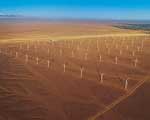
China Wind Power 2010 Conference&Exhibition
China Wind Power 2010 is the largest and most important international wind power conference and exhibition in China.
