China is poised to surpass the United States to become the world's largest e-commerce market this year, according to consultancy Bain & Co.
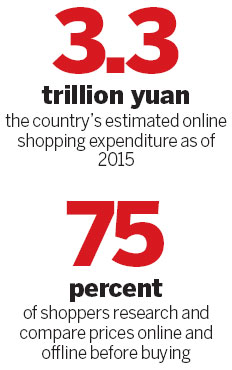
With forecast 32 percent average annual growth, online shopping expenditures in China are set to reach 3.3 trillion yuan ($539 billion) by 2015, the consultancy said in a report.
The study was based on a survey of more than 1,300 shoppers in China across a range of cities, ages, educational backgrounds and income levels.
"While beating the US is a major milestone for e-commerce in China, there is no longer a meaningful distinction between retailers' brick-and-mortar, Web and mobile strategies," said Serge Hoffmann, a partner in Bain's retail practice in China and co-author of the report.
The study found that more than 70 percent of Chinese shoppers research products and compare prices online and offline, and across different e-stores, with half of them citing price as the top reason for online shopping.
The research suggested that two-thirds of buyers rely on smartphones to browse for or buy products, a proportion higher than the US.
The figure climbed to 75 percent for upper-income consumers, who have a monthly household income of more than 50,000 yuan.
"China's rising middle class has high expectations of consumer products and also a need for product verification.
"With the rise of e-commerce and social media, online marketing channels and Internet forums offer a platform for consumers to gather the intelligence they need to make informed purchasing decisions," said Robert Theleen, chair of the American Chamber of Commerce in Shanghai.
The potential is huge for business-to-customer sites to woo shoppers from customer-to-customer sites, said Hoffmann.
For instance, the compound annual growth rate for B2C platforms was 160 percent from 2009 to 2012, and the sector is expected to continue growing by 53 percent annually through 2015.
In comparison, Taobao.com, China's leading C2C platform, grew by a compound annual rate of about 65 percent throughout the period.
Given a choice, 82.9 percent of shoppers would prefer an e-store with a brick-and-mortar presence over pure play sites like Jingdong Mall, which only runs digital stores.
"This indicates a significant growth opportunity for omni-channel merchants," said Hoffmann.
He identified two reasons for shoppers' preferences. One is the "touch and feel" of a physical shop. In general, Chinese consumers lack confidence in merchants because they are worried about being sold fake or low-quality products, especially online.


Copyright 1995 - . All rights reserved. The content (including but not limited to text, photo, multimedia information, etc) published in this site belongs to China Daily Information Co (CDIC). Without written authorization from CDIC, such content shall not be republished or used in any form. Note: Browsers with 1024*768 or higher resolution are suggested for this site.
License for publishing multimedia online 0108263 Registration Number: 130349