Renewable energy boost


 |
|
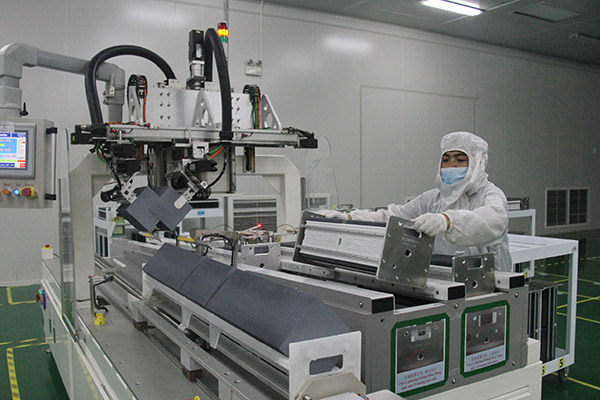
A staff member works at a China-invested photovoltaic technology company in Hanoi, Vietnam. [Photo/Xinhua] |
Chinese firms fuel funding for power projects in Belt and Road economies
Investment in renewable energy projects linked to the Belt and Road Initiative "exceeded expectations" last year.
Industry insiders expressed delight with the better-than-expected results with total investment by Chinese companies in the entire energy industry more than doubling compared to 2015.
"Existing cooperation projects in renewable energy with economies participating in the Belt and Road Initiative have exceeded our expectation," said Zhang Shiguo, director with the China Industry Overseas Development and Plan Association, a key non-profit organization.
"Total investment in the power generation sector in 2016 reached $7.66 billion (more than double the 2015 figure)," he added.
Hydropower and other renewable energy accounted for 48 percent of total investment. Thermal power came next with 21 percent, while power transmission and transformation reached 16 percent, Zhang pointed out.
He also suggested that governments could play a bigger role in improving the business environment for Chinese companies looking to invest in renewable energy projects.
"Legislation on outbound investment was also crucial to regulate the overseas business operations of companies, and safeguard their legitimate rights and interests," Zhang said.
"Policies on financing, tax preference and foreign exchange management should be improved to make it easier, and cheaper, for these companies to raise money for their overseas projects," he added.
JinkoSolar Holding Co Ltd announced that the Belt and Road Initiative had opened up new growth opportunities outside of China.
The world's largest solar panel producer by shipments has taken advantage of overseas projects and recalibrated its strategy toward these markets.
"Infrastructure in certain economies involved in the initiative are at early stages of development, while China's photovoltaic technology has made clean energy affordable," said Qian Jing, vice-president at JinkoSolar.
The company has invested heavily in economies involved in the initiative, with the production capacity of its projects surpassing 1 gigawatt, the equivalent of 1 billion watts.
These included a power supply agreement with the Federal Electricity Commission of Mexico for 188 megawatt of capacity.
Industry experts confirmed this investment has proved vital to economies associated with the Belt and Road Initiative.
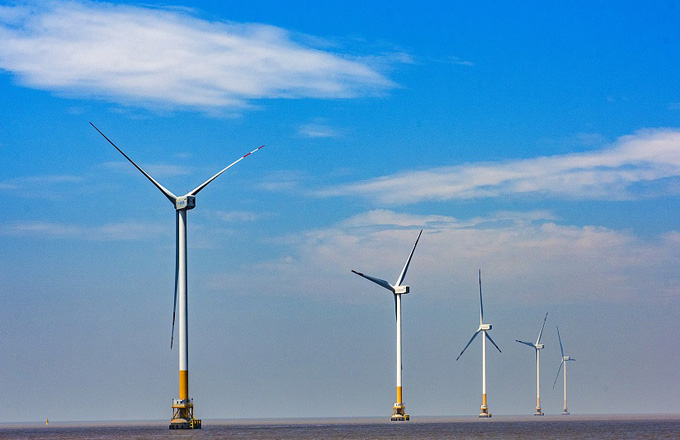
Pakistan, for example, is benefiting from investment in the energy sector after Chinese companies rolled out 16 projects for wind farms, solar power plants, coal and hydropower stations.
This will boost the country's installed capacity by 11.6 mW, an increase of 70 percent.
"By providing power to Pakistanis, who previously had no proper access to electricity, these projects will also greatly help the country's economic and social development," said Yuan Jiamei, a professor at North China Electric Power University.
In the past decade, power consumption of economies involved in the initiative has increased by 30 percent and it will continue to rise.
"China's development in power generation technology will (also) play an even bigger role in these economies' development, which is beneficial to the entire world," Yuan said. Cooperation between China and other Belt and Road Initiative economies is linked through development contracts and equipment exports. China has signed agreements involving 295 power projects with more than 40 countries in the past four years. These include coal-fired and hydropower stations in Southeast Asia, and wind farms and coal projects in South Asia.
Last year, the world's second biggest economy invested in 189 projects in 29 countries in regions including Southeast Asia, South Asia, West Africa and North Africa.
Fossil fuels, including oil and coal, are still the main energy sources for most economies linked to the Belt and Road Initiative. But they are now looking for renewable energy alternatives.
"The installed capacity of these (greener) plants is likely to rise by 1.96 gW to 2.83 gW by 2030," said Yuan, adding that alternative energy is crucial for these economies as they combat air pollution and water shortages.
Zhu Huiping, vice-secretary general of the Association for International Power Production Capacity Cooperation, echoed those views.
She said green energy alternatives should be seriously considered when developing new power plants to address environmental issues.