Collectively owned land could fix rental shortage


 |
|
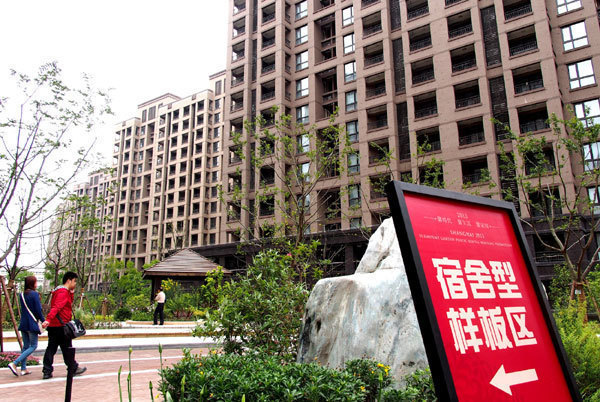
Prospective tenants visit the public rental housing at the Xinyue apartments in Shanghai, on May 15, 2013. [Photo/Xinhua] |
Land and housing authorities are encouraging large cities across China to set up housing projects for tenants using collectively owned land parcels, in one more measure to increase supplies for the residential leasing market.
A statement by two authorities released on Monday said the first batch of cities piloting the program will be Beijing, Shanghai, Shenyang, Nanjing, Hangzhou, Hefei, Xiamen, Zhenzhou, Wuhan, Guangzhou, Foshan, Zhaoqing, and Chengdu.
All of the cities are megacities, or large ones with fast and growing net population inflows.
The statement did not specify how much land will be included in pilot programs or how many rooms are to be built. But it said none of the rooms in the rental projects can be sold, and all the projects shall be run on the basis of "volunteerism".
China has a migrant population of some 245 million, and 7 million college graduates starting work each year. These newcomers to cities are making significant demands on the residential market.
Since March 2017, the central government and local governments have been launching a slew of measures supporting development of residential leasing in a bid to add to supplies of rental housing.
Setting up rental projects on collectively owned land, usually located in suburban and rural areas, may help to reduce housing costs for newcomers to cities, analysts said.
"In fact, this process is often aligned with the refurbishment and upgrading of housing projects in rural areas and shanty towns in many cities," said Huang Yawen, an analyst with Foshan-based Xinjian Real Estate.
Li Yujia, researcher with Shenzhen Real Estate Research Institute, said in a research note that developing the leasing market is an important part of the "long-term mechanism" for healthy, sustainable and balanced development of the real estate market in China as a whole.
It costs local governments a lot of time and resources to implement these policies, and cities may do it in various ways depending on their capability and natural endowment, Li said.
"Development of rental housing projects should go along with residents' intentions, and public services attached to housing projects shall also be developed at the same time to enable tenants to have good access to schooling, healthcare and other resources. Only in this way can rental projects be well-accepted", Li said.