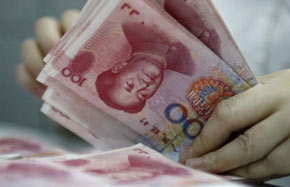
China strives to reduce financial risk


BEIJING — Risk control and serving the real economy will be the major tasks of China's financial sector in the second half of this year.
Guarding against systemic financial risk is vital to the health of the economy and so the government will do more to monitor, predict and deal with risk in a more timely manner. Serving the real economy is the soul purpose of the financial sector and the most basic protection against financial risk.
While the central bank and financial regulators have identified major problems, including pseudo-banking and illegal fund-raising, China's financial risk is felt to be generally under control.
At the end of June, commercial banks' average capital adequacy ratio stood at 13.2 percent. Liquidity coverage ratio was 124.4 percent, and the provision coverage ratio of commercial bank was 172.3 percent.
Financial risks mainly come from poor coordination between various regulators, according to Li Yang, director of National Institution for Finance and Development. To deal with this, a new cabinet committee has been given responsibility for coordinating financial development and regulation.
The committee will ensure coherence between monetary, fiscal and industrial policies, targeting weak links in supervision. Specifically, the committee will improve risk monitoring and early-warning mechanisms, coordinate risk prevention and deal with structural and systemic issues.
Problems emerging from reform of the financial sector should be solved by the committee, said Dong Dengxin of Wuhan University of Science and Technology.
Recent plans require great improvements in efficiency and quality of regulation, with more resources diverted into weak areas. Direct financing will be prioritized while indirect financing will be improved through the transformation of major state-owned banks and by making better use of smaller banks and private financial institutions.
More money was channeled into the real economy in H1. New private investment increased by 1.4 trillion yuan (about 200 billion yuan) from the same period a year ago to 11.2 trillion yuan.
Banks issued 7.97 trillion yuan of new yuan-denominated loans, 436 billion yuan more than the same period last year.
Internationalization of the yuan and increasing convertibility of the capital account should proceed at a steady pace. To that end, last month, overseas investors gained increased access to the Chinese mainland's $10 trillion bond market. The bond connect platform with Hong Kong allows qualified overseas investors to trade bonds on the mainland interbank bond market, including treasury bonds, local government bonds, policy bank bonds and commercial bank bonds.
- SOEs stress financial risk control
- New cabinet committee vital to financial risk prevention: Central bank official
- China to enhance macro prudential management to contain financial risk
- China in strong position to ward off financial risk
- China to put more emphasis on financial risk prevention in 2017