World Bank economist says China economic policy aims for growth, stability


LONDON - China is pursuing an economic policy that is carefully calibrated to ensure both growth and stability, according to a World Bank economist.
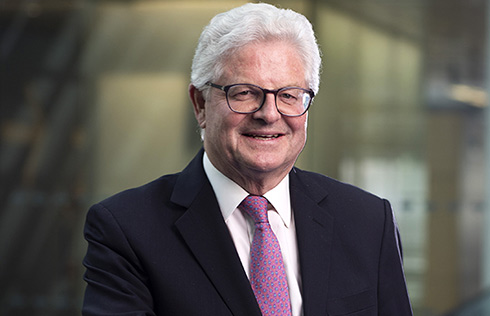
Franziska Ohnsorge, lead economist with the World Bank, told Xinhua in London that China was in the midst of significant structural reforms.
"The authorities are very carefully calibrating their growth path. They are beginning to unwind financial sector vulnerabilities.
"House prices seem to be stabilizing. They have placed property market restrictions in some places. Credit growth is slowing," she said.
"So they are unwinding -- slowly, slowly, gradually -- financial market vulnerabilities."
The key to resolving structural imbalance lies in pushing supply-side reform, according to a statement following the Central Economic Work Conference last month.
The curbing of asset bubbles will assume more importance in 2017 as the property market has raised fears of risks to financial stability.
China pro-growth measures and loose monetary policies had fueled strong growth in real estate and investment, two sectors that have proved critical growth drivers, but not without unwanted outcomes.
For example, house prices in major cities have soared in an unreasonable manner and required tightening measures.
Ohnsorge said: "It is a very careful balancing act that the authorities are implementing.
"For now we see it well managed and it is on track to meet the expectations of a gradual slowdown."
Ohnsorge is the lead author of the World Bank's latest report on the global economy, which was published on Wednesday.
The report noted that Chinese growth is estimated to have slightly decelerated to 6.7 percent last year.
As part of continuing economic rebalancing, growth has been concentrated primarily in services, while industrial production has stabilized at moderate levels.
The internal rebalancing is also evident on the demand side -- consumption growth has been strong, while investment growth has continued to moderate from the post-crisis peak.
Ohnsorge was confident that the structure of the Chinese banking system provided authorities with an effective tool to manage the stresses that might emerge in 2017.
"In a way the authorities have the buffers needed to offset any stresses that might emerge," she said.
"Government debt, even by its broadest estimate, is of the order of 60 percent of GDP. There is room to provide support.
"The largest banks, the banking system at least, is to a large degree State-owned so that supports confidence when there are stresses."
The World Bank report noted that despite some easing, capital outflows from China remained sizable and continued to put downward pressure on the currency.
"So all these institutions, and the fiscal buffers, they add to the stability," she added.