BEIJING - By setting up seven more free trade zones (FTZs), China has demonstrated its resolve to liberalize trade and investment.
The new FTZs in Chongqing, Henan, Hubei, Liaoning, Shaanxi, Sichuan and Zhejiang were announced by commerce minister Gao Hucheng on Wednesday, bringing the total number of FTZs to 11, just three years after the Shanghai FTZ opened for business.
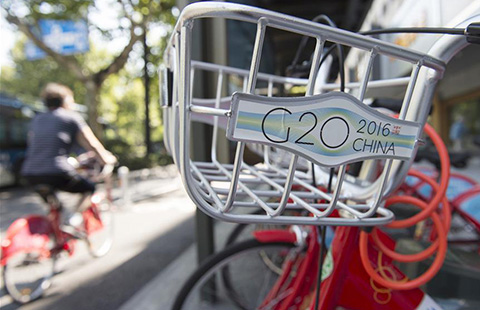
Bai Ming of the Chinese Academy of International Trade and Economic Cooperation sees the announcement as a clear statement of intent ahead of the Hangzhou G20 summit.
"The FTZs will increase access to the Chinese market and substantially improve the business environment for foreign companies," said Bai. "This demonstrates commitment to free trade and investment despite rising protectionism in other parts of the world."
This year, China is the target of 65 new probes and restrictions from overseas, mostly anti-dumping and anti-subsidy cases, a substantial increase from last year.
Last month, Australia rejected China's State Grid's bid for its largest electricity network, citing "national security" concerns. In July, Britain delayed work on a nuclear power station partnership, triggering media speculation that this was also due to "national security."
Despite the setbacks, the new FTZs are proof that China is still committed to opening up, said Bai.
The new FTZs involve both inland provincial regions in the west and coastal areas in the east and northeast, widening the scope of trade and investment. Among the FTZ successes have been the "negative list" specifying investment sectors that are off-limits to foreign investors, and allowing foreign firms to operate under the same investment rules as domestic ones. Replicating theses successes nationwide will greatly benefit foreign businesses, Bai said.
The announcement came as some are concerned over access to the Chinese market. The European Union Chamber of Commerce in China claimed earlier this week that European companies face a "lack of reciprocity." Chinese investment in Europe has increased rapidly while European firms are still heavily restricted in China.
"Chinese outbound investment may be outpacing inbound investment, but that's the result of China's success rather unfair treatment of foreign investment," Bai said. Many developed economies have experienced fast growth in outbound investment, which is a natural process, and China's economy has just reached this stage, he said.
Moreover, China is shifting to greener, quality growth and better market regulation, which require both domestic and foreign firms to adjust their investment strategies, he said, noting that there is abundant evidence of an improved business environment.
In the FTZs in Guangdong, Tianjin and Fujian, inbound direct investment rose by 225 percent, 220 percent and 548 percent year on year, respectively, in the period from their launch in April 2015 to the end of the year, official data show.
In the first seven months of 2016, EU countries' investment in China rose 31.3 percent year on year.
"Italian firms are very optimistic about their development in China, especially in western regions," said Sergio Maffettone, consul-general of Italy in Chongqing, where one of the new FTZs is located.


Copyright 1995 - . All rights reserved. The content (including but not limited to text, photo, multimedia information, etc) published in this site belongs to China Daily Information Co (CDIC). Without written authorization from CDIC, such content shall not be republished or used in any form. Note: Browsers with 1024*768 or higher resolution are suggested for this site.
License for publishing multimedia online 0108263 Registration Number: 130349