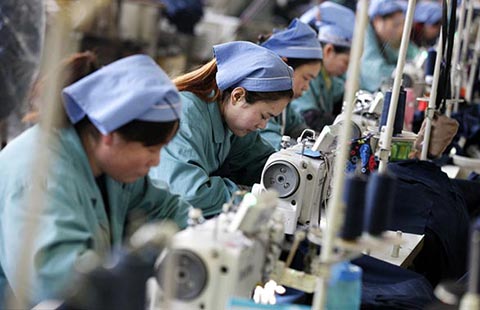
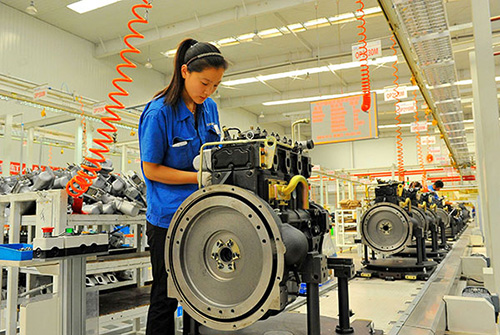
With more than two years of development, the Belt and Road Initiative has proved to be a practical tool for driving the growth of both Chinese and global companies, said business leaders.
The initiative, proposed by the Chinese government in 2013, envisages a Silk Road Economic Belt and a 21st Century Maritime Silk Road covering about 4.4 billion people in more than 60 countries and regions in Asia, Africa and Europe.
Klemens Brunner, senior vice-president of Lumileds Automotive Lighting, a Sino-Dutch joint venture, said his company has increased its exports to markets such as Indonesia, India and Thailand from its plants in Shanghai and Hubei province. It also plans to ship products from these plants to European markets.
Lumileds represents the former LED components and automotive lighting business unit of the Netherlands-based company Royal Philips. A consortium led by China's GO Scale Capital acquired an 80.1 percent stake in the unit in 2015. Philips retains the remaining 19.9 percent equity.
"If you look at the world's market environment, the Belt and Road Initiative is a great opportunity to enlarge our sales channels," said Brunner. "It will not only boost the size of the automobile market in China, but also help ship more products to various destinations throughout the world."
The company plans to expand capacity and accelerate the localization of its automobile lighting products with these plants. It has operations in more than 30 countries and has about 8,300 employees worldwide.
Eager to diversify their sales channels, multinationals such as Maersk Line, Siemens, DHL, UPS, Volkswagen, Samsung, Air Liquide and Bridgestone have either deployed resources in China or formed new partnerships with Chinese companies to enhance their market presence in economies along the two trading routes.
"Some countries along the routes, such as Germany, France, Singapore and Malaysia, already have better infrastructure and industrial foundations to fuel their growth. But for some of the others, developing infrastructure and service remains crucial," said Ge Xiangyang, an investment lawyer at the Beijing office of Hong Kong-based global law firm Mayer Brown JSM.
His firm also formed a partnership last year with Jingtian & Gongcheng Attorneys at Law, headquartered in Beijing, to assist Chinese companies to carry out mergers and acquisitions along the routes, especially in Africa.
Thanks to the initiative, China so far has established 75 overseas economic and trade cooperation zones in 35 countries and regions, according to the Ministry of Commerce.

Copyright 1995 - . All rights reserved. The content (including but not limited to text, photo, multimedia information, etc) published in this site belongs to China Daily Information Co (CDIC). Without written authorization from CDIC, such content shall not be republished or used in any form. Note: Browsers with 1024*768 or higher resolution are suggested for this site.
License for publishing multimedia online 0108263 Registration Number: 130349